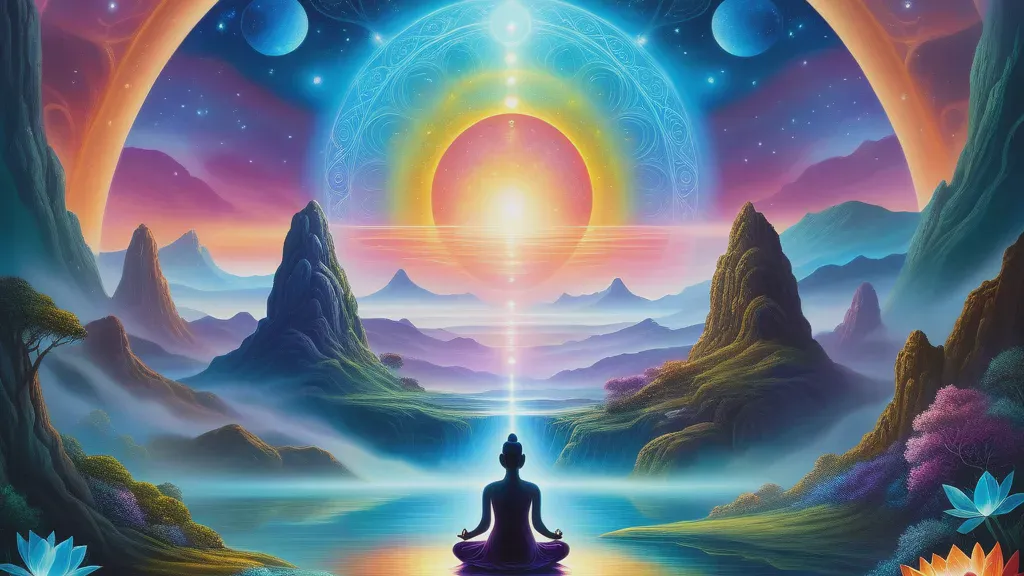
Meditating
Jungian Archetypes
Meaning
Dreams of meditating often indicate a desire for inner peace and self-reflection. This symbol arises when the subconscious is seeking clarity or balance in response to stress or external chaos.
Psychological Interpretation
Jungian thought associates meditation with achieving individuation and connecting with the Self. Cognitive psychology may view it as a coping strategy for anxiety. Practically, it suggests the importance of mindfulness in daily life.
Cultural & Historical Origins
Meditation has roots in many traditions, including Buddhism, where it is essential for enlightenment, and Hinduism, where practices like yoga facilitate spiritual growth.
Contextual Variations
You sit to meditate, but your thoughts keep turning into conversations; you return to your breath each time and eventually the voices fade.
This reflects active self-regulation—your psyche practicing how to observe mental noise without merging with it. The fading voices suggest growing inner distance from reactive thinking and increased emotional control.
You meditate in a crowded train station, eyes closed, while people move around you and you refuse to react.
Meditating in a noisy environment symbolizes maintaining inner steadiness amid external pressure. Psychologically, it points to building resilience: your Self is learning to stay grounded even when your Persona is demanded by the world.
You try to meditate, but the more you focus, the more you feel sadness rising; you stop, then resume with gentler attention.
This indicates that “calm” isn’t avoidance—it’s the capacity to hold emotion safely. The shift to gentler attention suggests emotional integration: allowing sadness to be processed rather than suppressed.
Frequently Asked Questions
Why do I dream about meditating when I’m not doing it in real life?
What does it mean if I can’t stop my thoughts during the dream?
If the meditation brings up sadness, is that a bad sign?
Journaling Prompts
- What was the anchor in my dream—breath, body, a sound—and how can I use that anchor in waking life?
- When the dream got difficult, what did I do next (return, avoid, fight), and what does that mirror about my coping style?
- What emotion surfaced during meditation, and what might it be asking me to acknowledge?
Related Symbols
Dreamed about Meditating?
Get a personalized AI interpretation that connects this symbol to your specific life circumstances.
Interpret My Dream