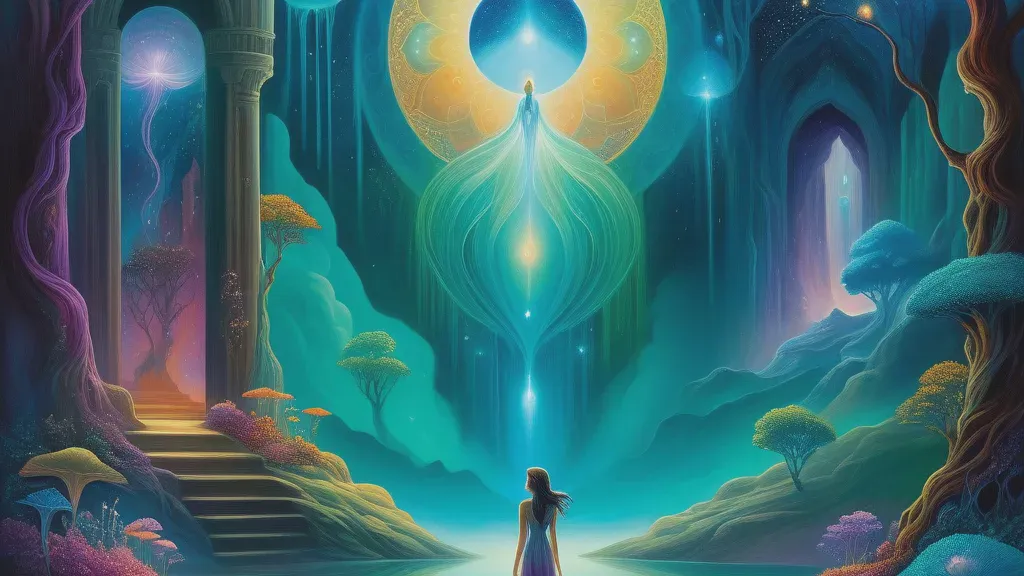
Liminal Space
Jungian Archetypes
Meaning
Dreaming of liminal space captures the feeling of being in-between stages of life. Psychologically, it represents the discomfort of transitions and the potential for transformation when approaching new beginnings.
Psychological Interpretation
In Jungian terms, liminal space embodies the Persona archetype, highlighting identity shifts. Cognitive psychology interprets it as a period of cognitive reevaluation, while practical psychology emphasizes the need for adaptability in change.
Cultural & Historical Origins
In many Indigenous cultures, liminal spaces are sacred, such as the vision quest in Native American traditions. In literature, T.S. Eliot's 'The Waste Land' reflects themes of dislocation and transition.
Contextual Variations
You’re in a hallway with doors that lead to different versions of the same place, and each time you open one, the lighting changes but nothing resolves.
Liminal space reflects being between identities or phases—exploring possibilities without landing. Psychologically, it can indicate experimentation, indecision, or a need for closure before you can move into a stable role.
A train platform appears at night, but the tracks fade into mist; you can hear a train somewhere yet it never arrives.
The misty tracks symbolize hope mixed with delay—your mind holds anticipation without certainty. Psychologically, it often corresponds to waiting for emotional readiness, timing, or external confirmation.
You look at your phone for directions, but the map is blank; you keep walking until you realize you’re moving in circles that feel “almost right.”
A blank map suggests missing internal guidance—your usual decision tools aren’t functioning in this phase. Psychologically, it can point to disorientation during change, where your mind needs new criteria rather than old ones.
Frequently Asked Questions
What does it mean if the liminal space never resolves into a clear ending?
Why do liminal spaces feel repetitive or circular?
Does liminal space mean I’m stuck?
Journaling Prompts
- What stage of life or identity feels “in-between,” and what are you trying to decide or define?
- In the dream, what kept you from arriving—doors, mist, blank maps, repeating hallways—and what in waking life plays the same role?
- If you could choose one small action that would make the next stage more possible, what would it be?
Related Symbols
Dreamed about Liminal Space?
Get a personalized AI interpretation that connects this symbol to your specific life circumstances.
Interpret My Dream