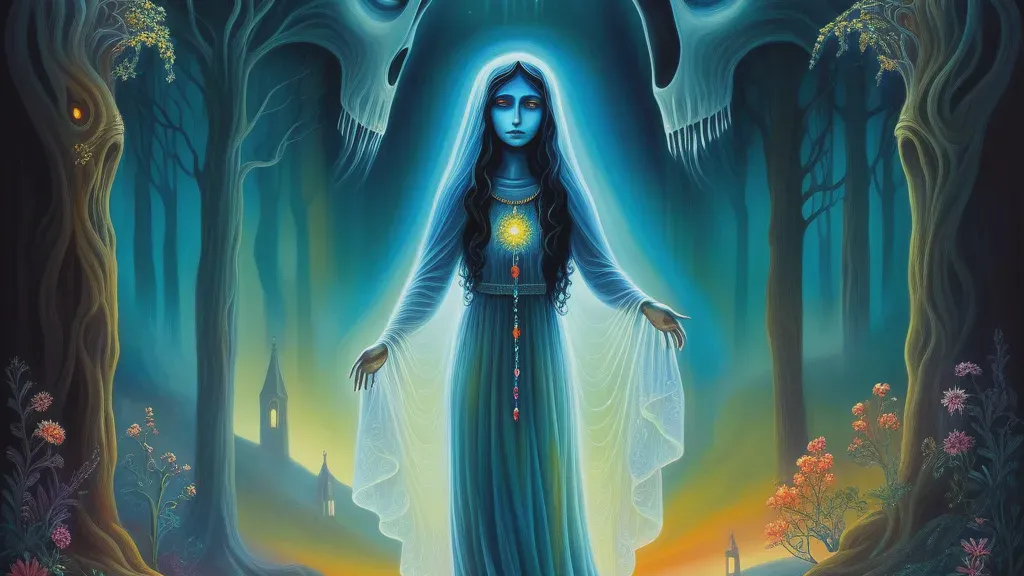
La Llorona
Jungian Archetypes
Meaning
Dreaming of La Llorona may reflect feelings of loss, guilt, or unresolved grief, representing the emotional turmoil within one's subconscious.
Psychological Interpretation
From Jungian analysis, La Llorona embodies the Shadow, representing repressed emotions. Cognitively, she symbolizes the consequences of unresolved issues, while practical psychology suggests addressing these feelings for healing.
Cultural & Historical Origins
In Mexican folklore, La Llorona is a haunting figure representing maternal loss and sorrow. The tale is prevalent in various Latin American cultures, emphasizing themes of grief and warning.
Contextual Variations
At night you hear a distant crying voice near a river; you follow it and find your own reflection in the water looking guilty and sad.
La Llorona often symbolizes unresolved grief and guilt that calls from the unconscious. Psychologically, the reflection suggests you’re confronting responsibility feelings—mourning what you lost or what you fear you caused.
You try to comfort a crying woman in the dream, but every time you reach for her, she turns into mist and the sound grows louder behind you.
This can reflect the pattern of attempting to soothe pain without addressing its source. Psychologically, it indicates that grief or guilt is not meant to be “fixed” by comforting gestures alone—it may require naming, boundaries, and honest processing.
You stand on a bridge and throw stones into the water to silence the crying; instead the stones create ripples that form words you can read.
Throwing stones to stop the sound can symbolize attempts to suppress emotion through distraction or control. The ripples forming words suggest the truth is seeking expression—your psyche wants language, not silence.
Frequently Asked Questions
Why did La Llorona feel like grief instead of just a scary figure?
What does it mean if the crying voice gets louder when I try to help?
Does dreaming of La Llorona mean I did something wrong?
Journaling Prompts
- What loss or disappointment keeps returning in your thoughts, and what do you wish you could say to yourself about it?
- When you hear La Llorona in the dream, what emotion is strongest—guilt, sadness, regret, or fear—and where do you feel it in your body?
- What attempts do you make in waking life to silence uncomfortable feelings, and what would it look like to let the emotion speak instead?
Related Symbols
Dreamed about La Llorona?
Get a personalized AI interpretation that connects this symbol to your specific life circumstances.
Interpret My Dream