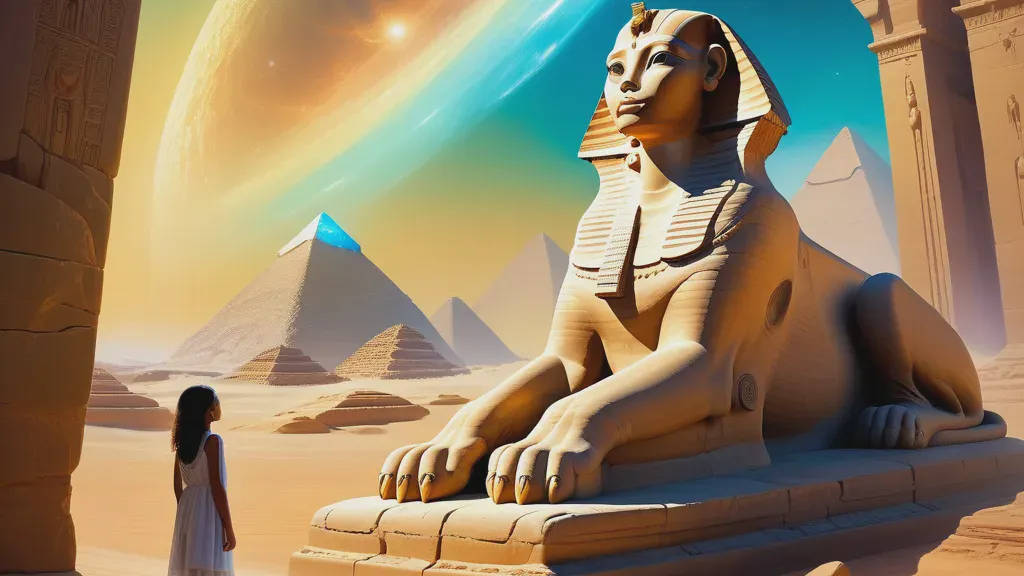
Forgotten Sphinx
Jungian Archetypes
Meaning
A forgotten sphinx in dreams embodies unresolved mysteries or unanswered questions about one's identity. It reflects the psyche's struggle to confront hidden truths and the complexity of the self.
Psychological Interpretation
From a Jungian perspective, the sphinx represents the Anima, inviting integration of feminine qualities. Cognitive psychology suggests it's a symbol of cognitive dissonance, while practical psychology encourages confronting fears and uncertainties for personal growth.
Cultural & Historical Origins
In Egyptian mythology, the sphinx symbolizes wisdom and protection, often guarding tombs. In Greek mythology, the Sphinx poses riddles, as seen in the story of Oedipus, representing the quest for knowledge and self-discovery.
Contextual Variations
You find a sphinx statue in an alley, half-buried. When you brush away the sand, it speaks in your own voice, asking a riddle you’ve been avoiding for years, and the answer feels like an emotion rather than a fact.
A forgotten sphinx symbolizes unresolved questions about identity and meaning. When the riddle is answered with emotion, it suggests your psyche wants self-recognition, not just intellectual solutions.
You sit across from the sphinx at night and try to answer with logic. Each time you give a reason, the sphinx changes the question, and you wake with the sense that you were never “allowed” to be uncertain.
This reflects pressure to be certain about who you are. The shifting question indicates identity is dynamic; your psyche may be challenging rigid self-definitions.
The sphinx is missing its face, but you can still feel its gaze. You move closer and realize the gaze is actually your own attention turning inward, uncovering a fear you keep calling “confusion.”
A face-less sphinx points to an identity mystery you’ve tried to keep at a distance. The gaze-as-self-attention suggests the real task is confronting what you’re withholding from yourself, especially about belonging or desire.
Frequently Asked Questions
Why does the sphinx in my dream feel familiar even though it’s forgotten?
What does it mean if the riddle changes when I try to answer?
How can a sphinx be related to identity?
Journaling Prompts
- What question have I been avoiding, and what emotion sits beneath my attempts to explain it away?
- If the sphinx’s riddle had to be answered in one honest sentence, what would I be afraid to say?
- Where do I demand certainty about myself—and what might happen if I allowed ambiguity for now?
Related Symbols
Dreamed about Forgotten Sphinx?
Get a personalized AI interpretation that connects this symbol to your specific life circumstances.
Interpret My Dream