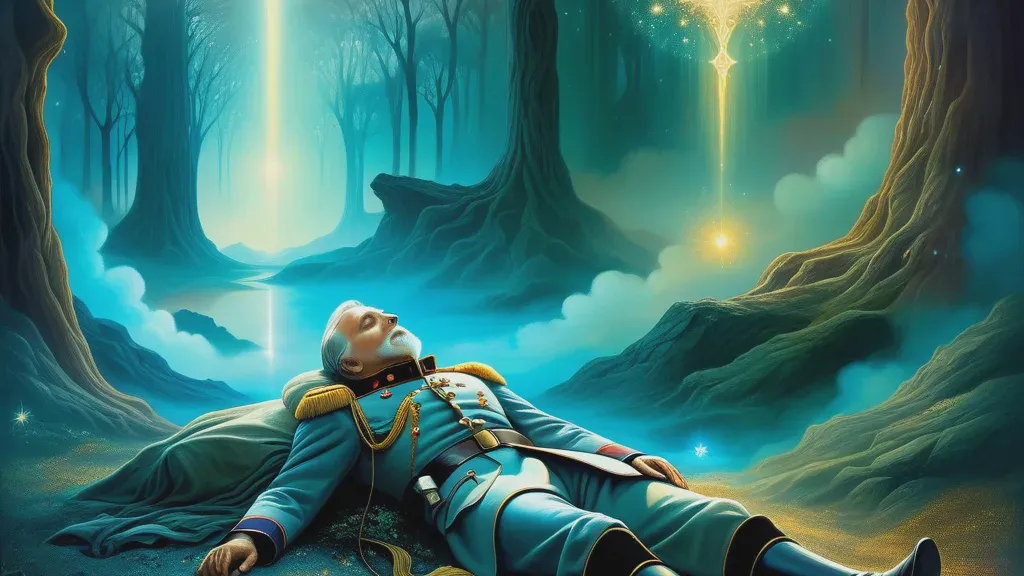
Fallen Soldier
Jungian Archetypes
Meaning
A dream of a fallen soldier typically signifies loss, sacrifice, or unresolved grief. Psychologically, it may reflect feelings of helplessness or a need to confront past traumas associated with conflict.
Psychological Interpretation
Jungian theory views fallen soldiers as symbols of the Hero archetype facing defeat, urging reflection on personal battles. Cognitive psychology interprets this as a manifestation of post-traumatic stress. Practical psychology focuses on the need for healing and acceptance of loss.
Cultural & Historical Origins
In the epic of 'The Iliad,' the deaths of soldiers highlight themes of honor and sacrifice in war. Similarly, Remembrance Day in many cultures commemorates fallen soldiers, emphasizing collective grief and the impact of conflict on society.
Contextual Variations
You’re walking through a quiet memorial field and find a fallen soldier’s name carved into a stone, but the soldier is also there—sitting up, motionless, as if waiting for you to speak. When you try to apologize, your voice comes out as a whisper and you feel relief mixed with grief.
This often points to unresolved mourning: the psyche keeps the “sacrifice” story active until you acknowledge what was lost and what it cost you personally. The soldier’s stillness can mirror how your body holds grief in a frozen, dutiful way, asking for a real emotional release rather than a rehearsed goodbye.
At night you return to a battlefield you don’t recognize. You see the fallen soldier from earlier dreams lying where you last left them, and you carefully cover them with a blanket, then place a letter beside the body you never sent in waking life.
The act of covering and leaving a letter suggests closure behaviors—protecting the memory and finally communicating what you couldn’t say. It can also reflect a need to stop “re-living” the moment of loss and instead transform it into something you can carry without punishment.
You’re interviewed like a witness for a court case, and the fallen soldier’s uniform is in a chair in front of you. The interviewer asks what the soldier would have wanted, and you realize you’ve been answering for them—while your own needs remain unspoken.
This scenario highlights guilt, responsibility, or loyalty to an ideal of honor. The psyche may be urging you to reclaim your own voice: to distinguish what you owe the past from what you owe yourself now.
Frequently Asked Questions
Why does the fallen soldier feel so present in my dream?
Does this dream mean danger or conflict is coming?
What should I do after dreaming this symbol?
Journaling Prompts
- Where in my life am I still treating a loss like a duty I must complete, instead of an emotion I’m allowed to feel?
- If the fallen soldier could receive one message from me today, what would I say—and what am I afraid will happen if I say it?
- What does “closure” look like for me: forgetting, honoring, forgiving, or changing how I carry the memory?
Related Symbols
Dreamed about Fallen Soldier?
Get a personalized AI interpretation that connects this symbol to your specific life circumstances.
Interpret My Dream