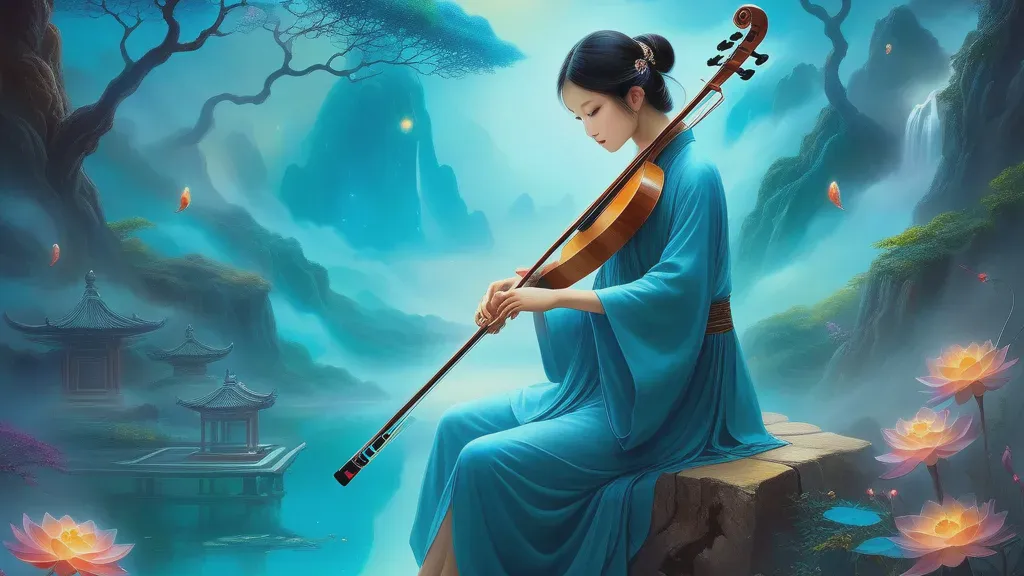
Erhu
Jungian Archetypes
Meaning
Dreaming of an erhu, a two-stringed instrument, may represent a longing for harmony or balance in life. It reflects the psychological mechanism of musical expression, symbolizing emotional release and the search for inner peace.
Psychological Interpretation
Jungian analysis could interpret the erhu as an expression of the Anima, connecting the dreamer to deeper emotional truths. Cognitive psychology might view it as a symbol of creativity and self-expression. Practically, it may suggest a need to reconnect with one's passions.
Cultural & Historical Origins
In Chinese culture, the erhu is associated with storytelling and emotional expression, often featured in traditional operas. The instrument appears in the classic text 'The Book of Songs,' symbolizing cultural identity and emotional depth.
Contextual Variations
You’re holding an erhu, and even though your fingers aren’t trained, the bow produces a haunting melody that makes you feel both homesick and energized.
The erhu symbolizes cultural connection and creative expression that reaches beyond skill. Psychologically, it suggests a longing to belong to your roots while also using creativity to process emotion.
You hear an erhu playing from another room; when you follow the sound, you find an old recording playing over and over, and you realize you’ve been avoiding your own feelings.
Hearing the instrument from elsewhere can indicate an inner voice you haven’t engaged directly. Psychologically, the loop suggests unresolved emotion seeking release through artistic or cultural channels.
You perform with others, and someone keeps adjusting your posture and bowing; you feel frustrated, then finally stop copying and play in your own style.
This points to negotiation between Persona expectations and authentic expression. Psychologically, the shift from copying to your own playing indicates reclaiming agency—turning heritage or creativity into something personal, not performative.
Frequently Asked Questions
Why would a traditional instrument show up in my dream?
What does it mean if I can’t play it well in the dream?
Why does the music feel emotional or nostalgic?
Journaling Prompts
- What does “heritage” or cultural connection mean to me personally, and how did the erhu’s melody make me feel?
- Did the dream emphasize performance, listening, or learning—and what does that say about how I relate to creativity right now?
- Where in my waking life am I trying to play by someone else’s rules, and what would my own style look like?
Related Symbols
Dreamed about Erhu?
Get a personalized AI interpretation that connects this symbol to your specific life circumstances.
Interpret My Dream