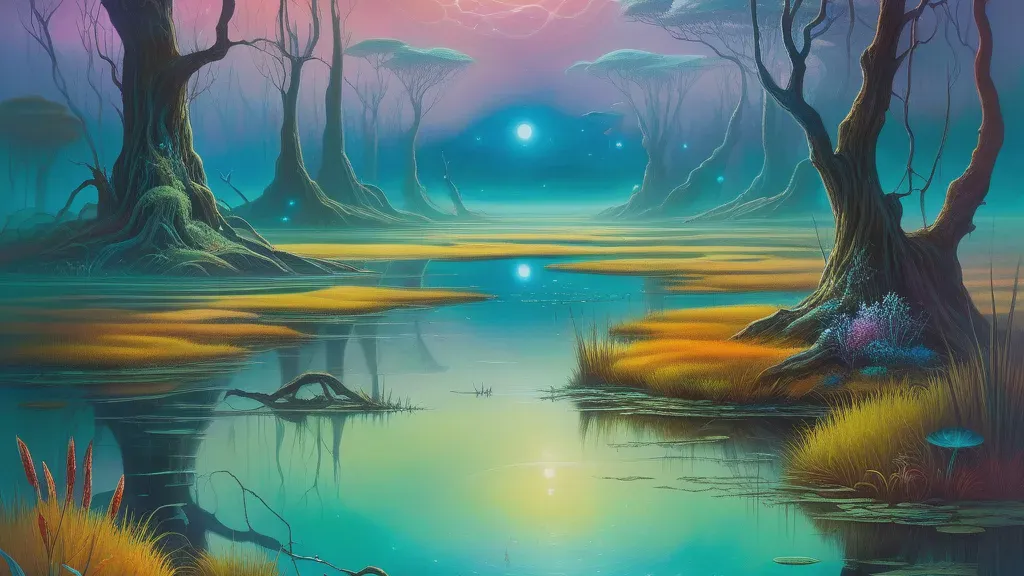
Dying Wetland
Jungian Archetypes
Meaning
A dying wetland in dreams can signify emotional imbalance or a feeling of being overwhelmed. It symbolizes the need for emotional cleansing and highlights the importance of nurturing one's emotional and relational landscape.
Psychological Interpretation
From a Jungian perspective, the wetland may represent the Great Mother, inviting the dreamer to explore nurturing aspects of self. Cognitive psychology may interpret it as a stress response, while practical psychology emphasizes the need for emotional healing.
Cultural & Historical Origins
In Celtic mythology, wetlands are associated with transformation and rebirth. Literature like 'The Wind in the Willows' by Kenneth Grahame embodies the magic of wetland environments, symbolizing emotional depth and connection to nature.
Contextual Variations
You wade into a wetland that’s losing its water; the ground turns muddy and unstable, and your footing keeps slipping. You feel overwhelmed, like emotions can’t be held in place.
A dying wetland symbolizes emotional imbalance—feelings are present but not contained safely. Psychologically, it points to overwhelm and the need for emotional cleansing and clearer boundaries so your mind can stabilize.
You try to wash yourself in the wetland, but the water becomes cloudy and then stuck around your skin; you can’t fully rinse off. You feel guilty, as if you’re “dirty” for having these emotions.
Cloudy water that won’t rinse can represent shame attached to emotion—trying to cleanse without addressing the underlying story. Psychologically, the dream suggests that emotional cleansing requires compassionate processing, not self-punishment.
An elder figure teaches you to step onto higher ground and wait until the water settles; you do, and the wetland becomes clearer. You notice you can breathe again and think more clearly.
The Wise Old Man presence emphasizes pacing and regulation—staying with emotions without drowning in them. Psychologically, it indicates readiness to manage overwhelm through timing, support, and grounding.
Frequently Asked Questions
Why does a dying wetland make me feel overwhelmed?
What does cloudy water stuck to my skin usually mean?
How can I use this dream practically?
Journaling Prompts
- Where do you feel emotionally unstable or slipping right now, and what boundary would help you stand more securely?
- What emotion did the dream try to cleanse, and what story of guilt or blame might be attached to it?
- What does “higher ground” look like for you—time alone, a trusted person, structure, or a specific routine that regulates you?
Related Symbols
Dreamed about Dying Wetland?
Get a personalized AI interpretation that connects this symbol to your specific life circumstances.
Interpret My Dream