Drought
Jungian Archetypes
Meaning
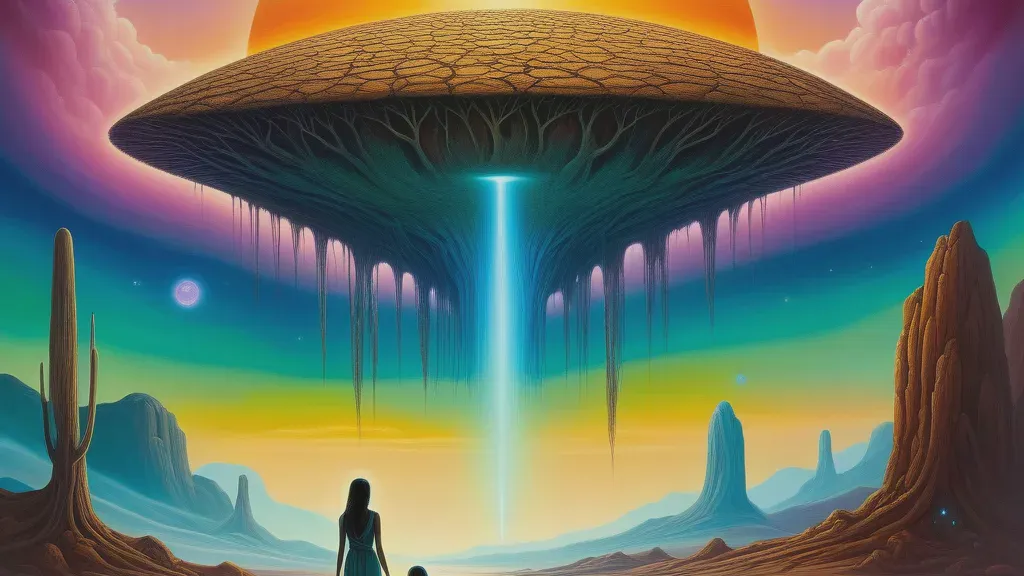
Drought is the rare dream weather defined by absence rather than event: nothing falls, nothing floods, nothing announces itself, and the trouble is precisely that nothing changes for longer than anyone can comfortably bear. Where a storm forces a reaction, a drought forces waiting, and the dreamer typically meets it as a cumulative condition, cracked ground, a shrinking well, a thinned garden, that has clearly been building for longer than the dream itself shows. Psychologically, it tends to surface when a source of nourishment the dreamer has counted on, attention, income, inspiration, affection, has been thinning gradually enough that no single moment marked its disappearance.
Psychological Interpretation
To dream of drought is to dream of a system running on reserves it no longer has. The specific site of the dryness usually matters more than the fact of it: a dry riverbed points to a relational or emotional supply that has stopped moving, a withered garden points to effort that has stopped receiving any return, a dry well points to a resource the dreamer once assumed was inexhaustible. Other people often appear unaffected in these dreams, laughing at a gathering while the dreamer alone searches for water, and that contrast frequently marks a private depletion being carried behind an outwardly composed appearance rather than announced to anyone. Because drought does not resolve quickly, dreams of it usually lack the tidy relief of a dream about rain; when rain does arrive within the same dream, it is worth noting whether it feels earned, given, or simply arrived, since each version implies a different relationship to whatever has been withheld.
Traditional Symbol Meaning
Long before drought became a symbol to be interpreted, it was treated as a test to be endured on purpose. The Desert Fathers of early Christianity, among them Anthony the Great, deliberately sought out the driest, most deprived stretches of the Egyptian desert, understanding physical dryness as the terrain in which spiritual clarity was most likely to appear. That association, between deprivation and a kind of forced honesty, still shapes how drought lands in dreams: it strips away whatever depended on abundance to keep functioning and leaves only what can survive without it. Historians studying agrarian societies have also traced how literal, sustained drought could unmake entire political orders; some scholars point to a severe, decades-long dry period in the seventeenth century as a contributing pressure behind the fall of China's Ming dynasty, alongside the famines and unrest it worsened. Whether or not any single drought fully explains a collapse of that scale, the pattern recorded across many agrarian civilizations is consistent: prolonged dryness erodes trust in whoever was supposed to be providing for the community, a dynamic dreamers often re-enact in miniature when a drought dream includes an authority figure who fails to act. Botanically, drought is not the same as death. Many desert plants produce seeds that can remain dormant in the soil for years, sometimes decades, waiting for exactly the right rainfall before germinating all at once into a landscape that briefly looks nothing like a desert. This is the quieter half of the symbol's inheritance: what looks barren on the surface may simply be waiting, intact and viable, for conditions it cannot control or hurry.
Jungian / Archetypal
Jungian psychology reads drought most directly through the withholding pole of the Great Mother archetype, the un-nourishing counterpart to the fertile, sheltering mother that the analyst Erich Neumann described at length in his study of the archetype's dual nature. Where the positive Great Mother gives without being asked, her withholding aspect is felt in dreams as a world that has simply stopped providing, without explanation or apparent fault, often echoing an early experience of care that once felt unreliable. The Persona is frequently implicated as well, since drought dreams so often stage a gap between an outwardly composed social self and a private sense of running dry underneath it. A dreamer who searches for water at a party full of people who seem unaffected is usually being shown the cost of maintaining that composed surface: the more convincing the Persona, the less anyone around the dreamer notices that something essential has stopped being replenished. The Child archetype supplies the counterweight to this bleak picture. Just as a desert seed can remain dormant for years without dying, the Child in Jungian thought represents potential that survives conditions hostile to its growth, waiting rather than expiring. A drought dream that includes any hint of a hidden seed, an unnoticed patch of green, a container that still holds a little moisture, is usually pointing toward exactly this kind of intact possibility, and individuation here has less to do with forcing rain than with correctly identifying what has actually survived.
Gestalt / Parts of Self
In Gestalt dreamwork, the drought is not simply happening to you; it is a disowned part of your own capacity to withhold, and the dream wants you to speak from its position rather than only from the position of the one searching for water. Ask what in you has stopped giving, whether that is attention, warmth, effort, or forgiveness, and notice how much energy is bound up in maintaining that refusal even when you also feel its cost. The empty well, the cracked garden bed, or the sand-filled watering can are each worth becoming in turn. Speaking as the dry ground, what would you say about why nothing has been allowed to reach you lately? Speaking as the watering can that produces only sand, what are you afraid would happen if the thing you offered someone actually met their real need instead of an approximation of it? Own the searching, too. If you spend the dream looking for water in obviously empty places, cups already dry, a well you already know has failed, that repetition is itself information: you may be going back to a source you already know cannot supply what you are asking for, rather than admitting that and looking somewhere new. Contact happens the moment you stop interpreting the drought and instead ask it directly what it wants you to stop pretending.
Psychodynamic / Freudian
Drought dreams frequently point toward a psychodynamic register of early deprivation rather than a present-day inconvenience. The pediatrician and analyst Donald Winnicott described the importance of a 'good enough' holding environment in infancy, one reliable enough that a developing person can trust that needs will be met without having to demand or perform for them. When that early holding falters, even in ordinary, non-catastrophic ways, the resulting sense of unreliable provision can resurface decades later as drought imagery whenever current circumstances brush against the same old vulnerability. The manifest picture of parched ground frequently displaces a more specific, harder-to-name anxiety: that asking for what one needs will not work, or worse, will be met with something that only looks like care, sand instead of water, attention instead of real understanding. This is why so many drought dreams involve someone offering help that turns out to be useless rather than simply offering nothing at all; the frustration of an inadequate response can feel more destabilizing than an honest absence. Guilt is a common companion feeling in these dreams, and it often signals that the dreamer has internalized responsibility for a shortage that was never actually theirs to solve. Recognizing whose depletion is really being depicted, the dreamer's own, or one inherited from an earlier caregiving relationship, is usually the more productive question than trying to will the dream landscape back into bloom.
Contemporary Psychological
Behavioral research on scarcity, notably the work of the economist Sendhil Mullainathan and the psychologist Eldar Shafir, has shown that perceived shortage does more than create discomfort; it narrows attention into a kind of tunnel vision, making it harder to plan, harder to think beyond the immediate lack, and harder to make decisions that would actually relieve the shortage over time. Drought dreams may be one way this tunneling shows up during sleep, a mind so preoccupied with an ongoing deficit that it cannot picture much beyond the deficit itself. This research also complicates a common assumption about these dreams: that the solution is simply to find more water, more time, more resources. Scarcity research suggests that the tunneling itself, not only the underlying shortage, becomes part of the problem, since it consumes the mental bandwidth that would otherwise be available to solve it. A dreamer stuck checking the same empty well over and over may be enacting exactly this trap rather than failing to notice an obvious alternative. What makes drought distinct from a single dramatic dream of loss is its duration; scarcity's cognitive costs compound the longer a shortage continues, which is consistent with how dreamers describe these dreams, less as a single frightening image and more as an atmosphere that has been present for a while before the dream ever started. Attending to how long the dryness has already lasted inside the dream, not just its presence, may be the most useful detail to carry back into waking life.
Cultural & Historical Origins
In the Ugaritic Baal Cycle, one of the oldest surviving Near Eastern myth cycles, the storm god Baal's defeat by Mot, the god of death and sterility, causes the land to wither until Baal is restored, making drought the direct consequence of a god's temporary absence rather than an impersonal weather event. The Hebrew Bible tells a related story on a human scale: in the first Book of Kings, the prophet Elijah announces a multi-year drought as a consequence of Israel's turn toward other gods, and is himself sustained during it by ravens that bring him food beside a hidden stream. In the American Southwest, Hopi and other Pueblo communities have long maintained kachina ceremonies and rain dances timed specifically to periods of dryness, treating drought not as a fixed sentence but as a condition that ongoing ritual relationship with the land can address. Across these traditions, drought is rarely read as a simple absence of rain; it is treated as a signal that a relationship, with a god, a land, or a community, needs tending.
Contextual Variations
Watching a childhood well go dry rope-length by rope-length
A well that empties gradually as you lower the rope again and again usually reflects a source of support you have measured your dependence on for a long time, family, an old friendship, a steady income, that is thinning slower than you can openly acknowledge. The repeated lowering of the rope suggests you already suspect the outcome but keep checking anyway. Consider what it would take to look for water somewhere new rather than confirming the same loss again.
Searching a party full of drinks for a glass that is not empty
Being surrounded by people who seem to have plenty while your own glass stays empty often points to a support you assume everyone else has access to except you, attention, reassurance, ease. The social setting matters: this dream usually appears when the gap feels embarrassing to admit out loud, not just uncomfortable to live with. Notice whether you actually ask anyone at the party for a refill, or simply keep searching alone.
A garden you planted seasons ago finally cracking underfoot
A long-tended garden that only now shows visible cracks suggests an effort you invested real time in has been under strain for far longer than you have let yourself see. The delay between planting and cracking is the point: the dream is showing you the gap between when the neglect actually started and when it became undeniable. Ask what maintenance you quietly stopped doing well before the ground gave any sign of it.
Being handed a watering can that is filled with warm sand
Receiving help that turns out to be the wrong substance entirely, sand instead of water, usually points to care that misses your actual need even though it is offered sincerely. This is often more disorienting than receiving no help at all, because you have to reconcile someone's good intentions with their inaccurate read of what you require. Consider whether you have ever clearly told this person, or yourself, what real water would look like.
Frequently Asked Questions
Why did my drought dream involve other people who seemed unaffected?
Is a drought dream a sign that I am burned out?
Why do I keep having dreams about running out of water?
Does a drought dream mean something good is about to end?
Journaling Prompts
- Name one source of nourishment, attention, rest, creative energy, connection, that has been thinning in your life so slowly you cannot point to the exact day it started. Write about how long you think it has actually been happening.
- Recall a moment recently when you were offered help that did not actually meet your need. Write about whether you told the person, or only noticed the mismatch privately and let it pass.
- Think about a part of yourself that has gone quiet or dormant rather than disappeared entirely. Write about what conditions, however small, might be enough to bring it back into activity.
- Consider a situation where you have kept asking the same source for support even though you already suspect it has little left to give. Write about where else you might look instead, and what stops you from trying.
Related Symbols
Dreamed about Drought?
Get a personalized AI interpretation that connects this symbol to your specific life circumstances.
Interpret My Dream