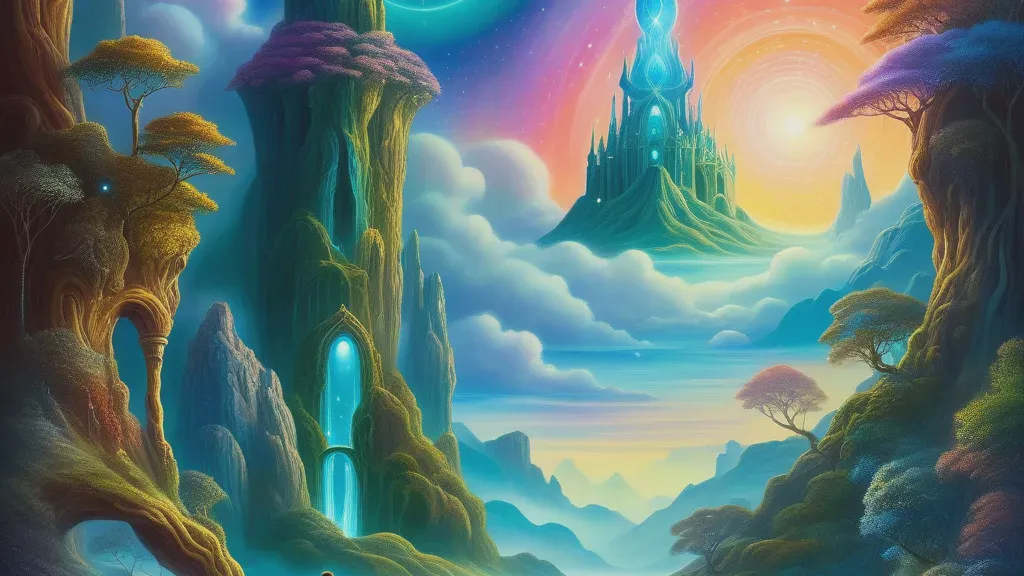
Dream Realm
Jungian Archetypes
Meaning
A dream realm signals your psyche building a safe-but-instructive world for inner negotiations. Child/ Wise Old Man/ Great Mother archetypes imply you’re learning rules (structure) while seeking comfort and guidance.
Psychological Interpretation
Jung: realm as psyche-space where Great Mother nurtures, Wise Old Man sets meaning, Child tests boundaries. Cognitive: world-building to reduce uncertainty. Practical: map what “laws” the realm follows—then apply them to real-life decision constraints.
Cultural & Historical Origins
Dream realms echo Plato’s cave (constructed reality) and the Norse realms (Niflheim/Asgard) as internalized worlds. In Chinese Daoist lore, dreamlike travel to other realms (zhenren/immortal domains) parallels psyche exploration.
Contextual Variations
You enter a dream realm that looks like a small town built from your childhood streets, but the signs point to choices you’re currently debating.
A dream realm often signals inner negotiation—a safe-but-instructive environment where your psyche tests options. The childhood layout suggests you’re drawing on early learning to guide present decisions.
In the realm, a wise old figure runs a library where each book opens into a different version of your future, and you choose which shelf to approach.
This reflects your mind structuring guidance and forecasting—using a “wise” container to manage uncertainty. Psychologically, it shows you’re trying to regain control by selecting which narratives you’ll trust.
You find a Great Mother-like figure tending a garden in the realm, and the plants grow based on what you confess aloud.
A nurturing presence with responsive growth suggests emotional processing that requires honesty. The garden indicates integration: what you admit becomes nourishment for your next psychological season.
Frequently Asked Questions
Why does my dream realm feel like it’s designed for me to figure something out?
What does it mean if the realm uses childhood places?
How should I interpret a wise figure or a nurturing figure in that realm?
Journaling Prompts
- What is the dream realm’s “job” in the story—decision-making, teaching, comforting, or negotiating—and how does it do that?
- Which character or location felt most influential (library, garden, street signs), and what real-life issue does it map to?
- What did I choose or confess in the realm, and what does that suggest I’m ready to do in waking life?
Related Symbols
Dreamed about Dream Realm?
Get a personalized AI interpretation that connects this symbol to your specific life circumstances.
Interpret My Dream