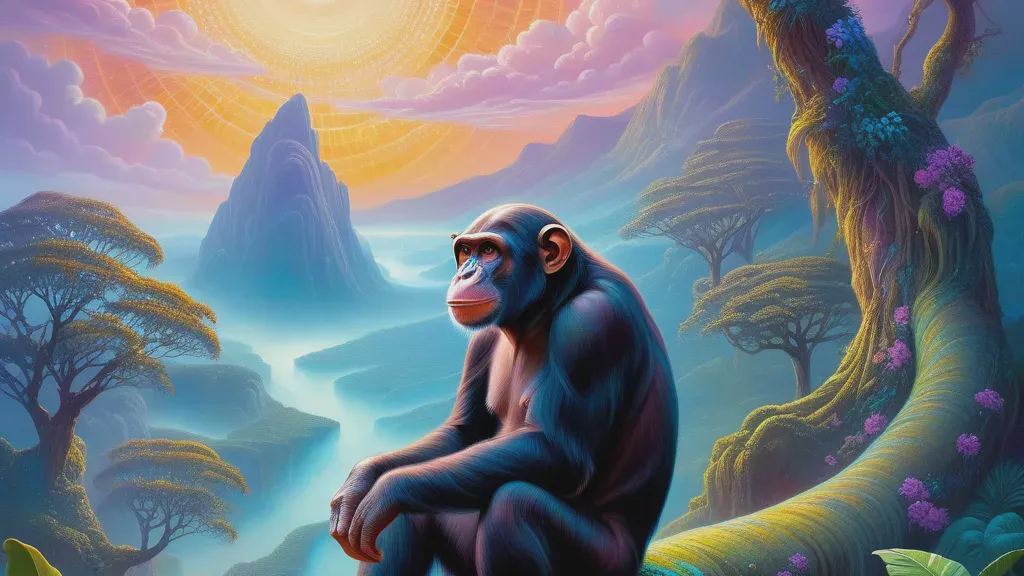
Chimpanzee
Jungian Archetypes
Meaning
Dreaming of chimpanzees can symbolize social dynamics and the exploration of one's primal instincts. This reflects a psychological examination of the animalistic traits within, highlighting the interplay between intellect and emotion.
Psychological Interpretation
From a Jungian perspective, chimpanzees could embody the shadow aspects of humanity, representing repressed instincts. Cognitive psychology might interpret them as a representation of social learning, while practical psychology suggests they invite introspection about interpersonal relationships.
Cultural & Historical Origins
In African folklore, chimpanzees often symbolize intelligence and community. In western literature, they are featured in works such as 'The Jungle Book,' highlighting the connection between humans and their primal nature.
Contextual Variations
A chimpanzee sits in a living room acting like it’s performing for an audience. It copies your gestures, then suddenly looks at you with a knowing expression and chatters, as if calling you out.
Chimpanzees in dreams often highlight social dynamics—how you perform, mirror others, or manage impressions. The copying suggests you may be adapting too closely to others’ expectations, while the “knowing” look points to a need for honest self-expression.
You’re in a group setting and a chimpanzee steals snacks from a table. People laugh, but you feel embarrassed and try to hide your reaction; later you realize you wanted to join in.
This can symbolize primal impulses—desire, playfulness, or aggression—that you’ve learned to regulate socially. The embarrassment may reflect guilt about wanting more joy or freedom, and the hidden reaction suggests you’re not fully allowing yourself.
The chimpanzee approaches you gently and offers a small object, like a key or toy. When you take it, it leads you to a mirror, and you notice you’re smiling for the first time in the dream.
An offering and a mirror can represent reclaiming a playful, instinctive part of yourself. Psychologically, it points to integrating spontaneity with your identity—allowing enjoyment without losing self-respect.
Frequently Asked Questions
Why did the chimpanzee feel like it was about me rather than about animals?
What does it mean if the chimpanzee is copying my actions?
Is a chimpanzee dream always negative because it involves mischief?
Journaling Prompts
- Where in my current life am I performing for others, and what part of me feels most “copied” or edited?
- What instinctive desire showed up in the dream (play, appetite, boldness), and what would it look like to express it safely?
- How did I feel when the chimpanzee approached—threatened, amused, ashamed, curious—and what does that feeling reveal?
Related Symbols
Dreamed about Chimpanzee?
Get a personalized AI interpretation that connects this symbol to your specific life circumstances.
Interpret My Dream