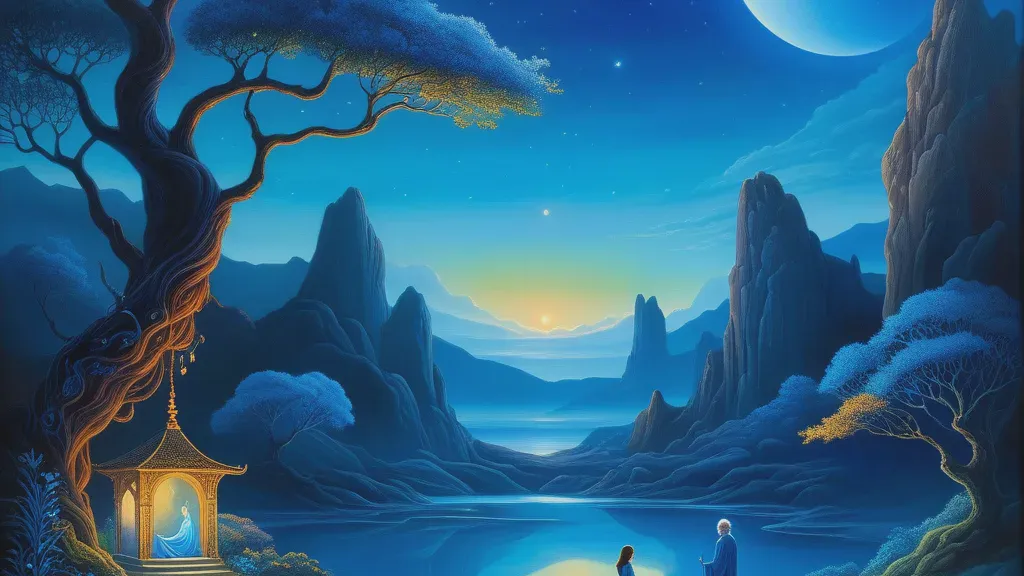
Blue Hour
Jungian Archetypes
Meaning
Dreaming of the blue hour signifies a transition or a liminal space between day and night. Psychologically, it represents moments of reflection, introspection, and the blending of realities, prompting emotional awareness.
Psychological Interpretation
From a Jungian perspective, the blue hour reflects the Shadow, symbolizing hidden emotions. Cognitive psychology views it as a moment for self-evaluation, while practical psychology suggests it’s a time for contemplation and emotional processing.
Cultural & Historical Origins
In literature, the blue hour is often depicted as a time for introspection, as seen in the works of Vincent van Gogh. In various cultures, it symbolizes the mystical time before nightfall, often linked to spiritual awakening.
Contextual Variations
You step outside during the blue hour and everything looks muted, like the world is between moods. You feel calm but distant, watching the last lights fade while you can’t decide what to feel next.
The blue hour often symbolizes liminality—an in-between phase where old clarity is gone but new certainty hasn’t arrived. Psychologically, it can reflect reflective processing: letting emotions settle so you can choose a direction.
You arrive at a familiar place at blue hour and see it differently than before. The same bench, street, or room carries new meaning, and you realize you’re grieving something while pretending you’re fine.
This dream can indicate emotional reappraisal—your mind revisiting the past with new awareness. The muted palette suggests you’re transitioning from denial or numbness into recognition.
You meet someone you used to rely on, but the conversation is slow and unfinished. When night fully arrives, they fade away, leaving you with a quiet sense of closure you didn’t expect.
A fading figure at blue hour can symbolize releasing an old attachment or role. Psychologically, it suggests your system is completing a phase and practicing emotional independence.
Frequently Asked Questions
Why do I feel reflective but also stuck during the blue hour?
What does it mean if the place looks familiar but changed?
Does blue hour relate to relationships?
Journaling Prompts
- What are you currently between—an old identity and a new one, a decision and its consequence, or grief and acceptance?
- What emotion does the muted color help you avoid, and what would happen if you let yourself name it plainly?
- If this blue-hour scene could turn into a “day” scene, what would be different—your actions, your boundaries, or your self-trust?
Related Symbols
Dreamed about Blue Hour?
Get a personalized AI interpretation that connects this symbol to your specific life circumstances.
Interpret My Dream