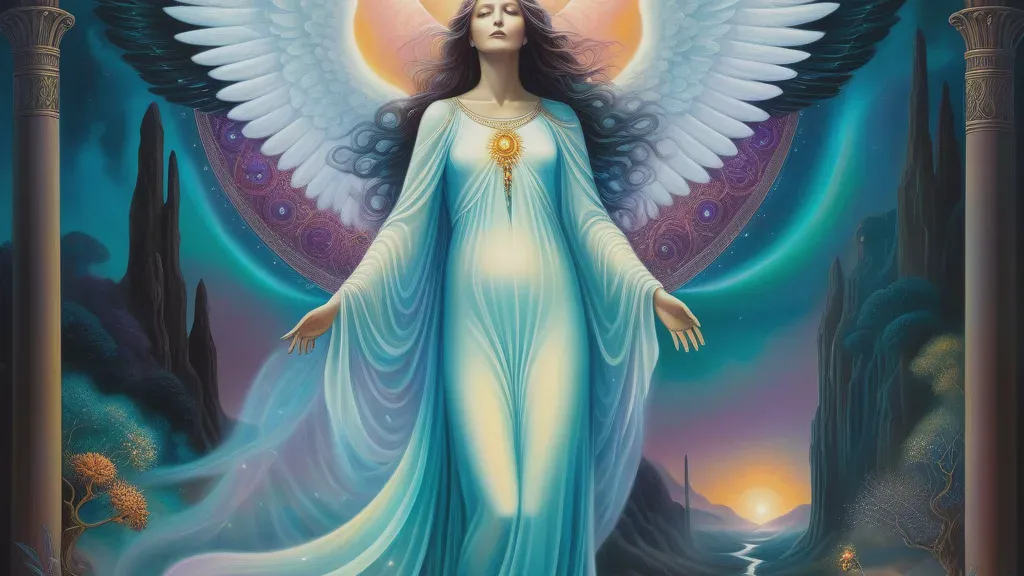
Angel Of Death
Jungian Archetypes
Meaning
Dreaming of the angel of death often signifies transformation, reflecting a psychological confrontation with mortality and change. This symbol can evoke fear or acceptance, illustrating the need to let go of old patterns and embrace new beginnings.
Psychological Interpretation
Jungian psychology views this angel as a figure of the Great Mother, representing the cycle of life. Cognitive theories suggest it prompts reflection on loss, while practical psychology emphasizes its role in facilitating personal growth through acceptance of change.
Cultural & Historical Origins
In Christianity, the angel of death is often depicted as a harbinger of transition, seen in texts like the Book of Revelation. In the Egyptian tradition, Anubis serves a similar role, guiding souls through the afterlife and representing transformation and rebirth.
Contextual Variations
A hooded figure approaches in silence, but instead of attacking, it gently places a hand on your shoulder. You feel a surge of panic, then the room brightens and you realize something old has been “closed.”
This often symbolizes the end of a psychological phase—grief, an identity role, or a coping strategy—felt as both threat and relief. The gentle touch suggests your psyche is guiding transformation rather than destroying you.
You’re in a hospital hallway, and the Angel of Death stands at every doorway, offering a choice: step through or turn back. You wake while deciding which door you can finally leave behind.
The dream externalizes a decision about letting go—often related to health fears, career direction, or relationship dynamics. The “choices” imply agency: the fear is real, but the outcome depends on what you’re ready to release.
The Angel of Death appears as a calm, familiar person from your past, speaking in reassuring phrases while you watch a clock stop. Afterward, you can breathe normally and feel oddly clear.
When the figure is familiar and calm, it can represent the death of a specific narrative you’ve carried (e.g., “I must endure,” “I can’t change”). The stopped clock suggests a mental restructuring—time for the old story has ended.
Frequently Asked Questions
Did my dream mean someone will die?
Why was the Angel of Death comforting instead of frightening?
What does it mean if I woke up relieved?
Journaling Prompts
- What exactly felt like it was ending in the dream—an identity, a relationship pattern, or a belief about safety?
- Where do I feel fear around change in waking life, and how did the dream’s tone transform that fear?
- If the Angel of Death offered a “door,” what would I be stepping through—and what would I be refusing to keep?
Related Symbols
Dreamed about Angel Of Death?
Get a personalized AI interpretation that connects this symbol to your specific life circumstances.
Interpret My Dream