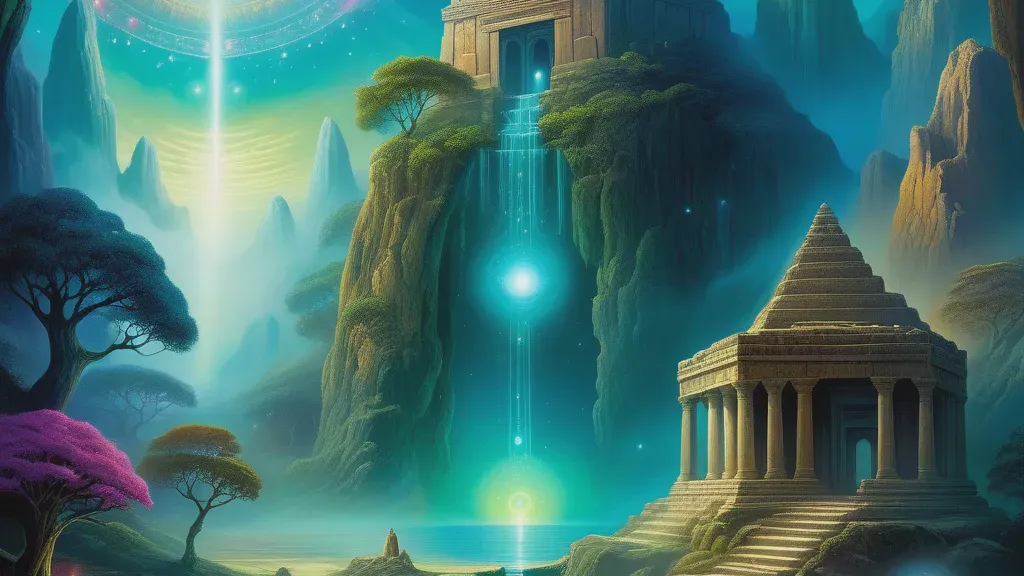
Ancient Site
Jungian Archetypes
Meaning
Dreaming of an ancient site symbolizes a connection to history and the subconscious, engaging psychological mechanisms of exploration and self-discovery as the dreamer seeks to understand their roots.
Psychological Interpretation
Jungian analysis may interpret ancient sites as manifestations of the Anima, representing the search for meaning. Cognitive psychology links it to curiosity about the self, while practical psychology emphasizes the importance of historical context in shaping identity.
Cultural & Historical Origins
In ancient Greece, sites like Delphi were sacred for seeking wisdom and prophecy, while Stonehenge in Britain is linked to astronomical events and cultural rituals. Both highlight the significance of history in understanding identity.
Contextual Variations
You enter an overgrown ancient ruin at night and follow faint carvings that seem to change as you read them, then you find a small chamber with your own name etched into the stone.
This often points to the mind using “history” as a safe container for buried personal material—memories, inherited beliefs, or old roles you’ve outgrown. The shifting carvings suggest your identity is actively rewriting what you thought you “already knew” about yourself.
You’re giving a tour of an ancient site to strangers, but you realize you don’t know the facts—when you improvise, the site responds (doors open, lights flicker, walls reveal hidden paths).
The mismatch between authority and knowledge can reflect imposter feelings or a new self trying to take the lead. The site responding to your improvisation suggests your subconscious rewards curiosity and experimentation rather than perfection.
You’re digging through collapsed rubble to uncover an artifact, and every time you pull something out, you feel a sudden wave of emotion—then you discover it’s not the artifact you wanted, but a simple tool that resembles something from your childhood.
Digging symbolizes excavation of meaning: you’re trying to locate “the source” of a current problem. Finding a childhood-like tool implies the solution is less about dramatic change and more about reclaiming an earlier skill or emotional need.
Frequently Asked Questions
Why did I dream of an ancient site that felt like it was “watching” me?
What does it mean if the carvings or symbols kept changing?
Does an ancient site dream mean I’m stuck in the past?
Journaling Prompts
- Where in my life am I trying to “decode” old information, and what part of me is actually asking for a new interpretation?
- What did I seek at the ancient site—an artifact, a door, a truth—and how does that match the goal I’m pursuing outside the dream?
- If the site could speak, what would it say about the role I’ve outgrown or the belief I inherited?
Related Symbols
Dreamed about Ancient Site?
Get a personalized AI interpretation that connects this symbol to your specific life circumstances.
Interpret My Dream