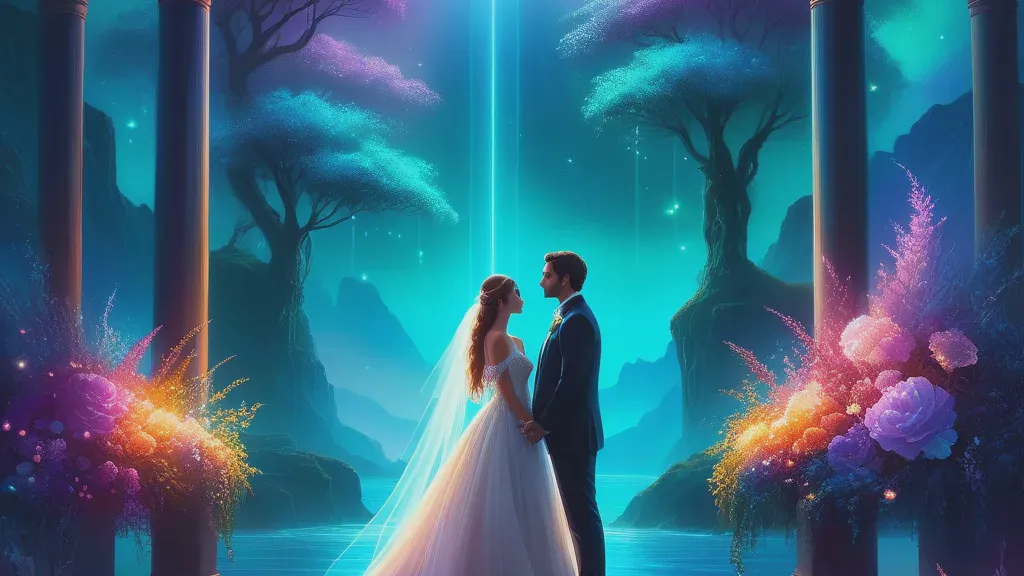
Wedding Dreams
Wedding dreams often symbolize commitment, union, or significant life transitions. They may represent your feelings about relationships, partnerships, or major decisions, whether or not you are actually planning a wedding.
Psychological Interpretation
Wedding dreams typically reflect desires for commitment, unity, or important life changes. They can also express anxieties about relationships, fear of commitment, or concerns about major life decisions and their consequences.
Had this dream?
Are you walking down the aisle, watching a wedding unfold, or unable to reach the ceremony in time? Tell us what happened and get a personalized interpretation of your own dream.
Interpret My DreamGestalt / Parts of Self
In Gestalt terms a wedding dream is a vivid stage on which the dreamer enacts a meeting of fragmented self-aspects that have been split off and left unintegrated. The ceremony, the vows, the guests, and the attire each stand for a particular quality or desire that the waking self has denied or suppressed—such as the capacity for intimacy, the need for commitment, the wish to be celebrated, or the fear of losing autonomy. When the dreamer watches the ceremony from the sidelines, the image operates as a projection: the unowned part is externalized as another person or as an event, allowing the psyche to keep the disowned quality at a safe distance while still feeling its presence. The emotional texture of the dream often swings between excitement, anxiety, and a sense of incompleteness, reflecting the underlying tension between the yearning for wholeness and the resistance to merging the disowned fragment with the conscious identity. The dream’s intensity is amplified when the wedding is imagined as perfect, chaotic, or aborted, because each scenario dramatizes a different mode of avoidance or acceptance. People experience these dreams when life circumstances trigger questions about commitment, role transitions, or self-validation, prompting the unconscious to bring the split parts to awareness through the symbolic language of marriage. A practical way to work with this material is to treat the wedding scene as a mirror and ask, “Which part of me is being invited to join the ceremony, and what does it look like?” By naming the quality—whether it is the desire to be loved, the fear of dependency, or the longing for personal achievement—and consciously acknowledging it in waking life, the dreamer begins the process of reintegrating the disowned element, reducing the need for the psyche to dramatize it in sleep. This simple reflective exercise can turn a recurring wedding dream from a source of confusion into a catalyst for inner cohesion.
Psychodynamic / Freudian
In psychodynamic terms a wedding dream presents a vivid manifest scene—a ceremony, vows, rings, and often a crowd of familiar faces—while the latent content is the symbolic representation of the dreamer’s inner desire for integration and wholeness. The ritual of union serves as a metaphor for the unconscious yearning to reconcile opposing parts of the self, such as masculine and feminine, rational and emotional, or personal aspirations and social expectations. Because the wedding is a socially sanctioned event that marks a transition from one status to another, it can also function as a wish-fulfilling fantasy that temporarily resolves the tension between the dreamer’s current sense of incompleteness and an imagined state of completeness. The latent wish is not merely for a literal marriage but for the psychic “marriage” of disparate inner elements, a unification that the conscious mind may deem unattainable or threatening. The emotional tone that accompanies the dream—whether joy, anxiety, dread, or ambivalence—reveals the defense mechanisms at work. When the dreamer feels elation, the unconscious may be employing idealization, projecting a flawless future onto the symbol of marriage to mask underlying feelings of inadequacy or fear of loss. Conversely, a sense of dread or a disrupted ceremony often signals repression of unresolved conflicts about intimacy, commitment, or the loss of autonomy, with the dream acting as a safety valve that allows the forbidden material to surface in a socially acceptable guise. The recurring pattern of wedding imagery can therefore indicate that the individual is repeatedly confronting the same split between the desire for connection and the fear of vulnerability, with the dream serving as a rehearsal space for negotiating those opposing impulses. A practical insight for the reader is to treat the wedding dream as a cue to explore where in waking life the self feels fragmented or where a new synthesis is needed. By identifying the specific emotions felt during the dream and tracing them to current relationships, career choices, or personal values, the individual can consciously work toward integrating the opposing parts that the unconscious has dramatized. This conscious integration reduces the need for the dream to function as a covert wish-fulfilling fantasy, allowing the dreamer to move from symbolic rehearsal to tangible, balanced action in waking life.
Personal Meaning
A wedding in a dream often signals a moment of integration, where the dreamer is negotiating the union of two parts of the self that have previously felt separate. From a Jungian perspective the ceremony can be seen as a symbolic marriage of conscious aspirations and unconscious material, suggesting that the dreamer is at a crossroads where a new identity or role is being forged. The emotional tone of the dream—whether it feels joyous, anxious, or ambivalent—reveals how comfortable the dreamer is with this internal consolidation. If the dreamer experiences excitement, it may indicate that the emerging synthesis feels authentic and supportive; if the dream is accompanied by dread or hesitation, it can point to fear of losing autonomy or of committing to a path that feels imposed. The psychological pull of wedding imagery arises when the waking life presents choices that require a commitment, such as a career shift, a serious relationship, or a personal transformation. The dream’s details—who is marrying whom, the presence of family, the setting of the venue—serve as clues to the specific domains where the dreamer feels pressure to unite opposing forces. Reflective questions that help the dreamer connect the symbol to daily experience include: Which two aspects of my life feel like they are waiting to be reconciled? What expectations do I sense from loved ones or from myself about how that reconciliation should look? How do I react when I imagine saying “I do” to a new responsibility or identity? By answering these questions, the dreamer can uncover whether the wedding dream is urging a wholehearted embrace of a new partnership, a professional venture, or an inner alignment, or whether it is warning of an unresolved conflict that needs to be addressed before moving forward. A practical insight from this interpretation is that the dreamer can treat the wedding as a rehearsal for real-world decisions: before committing to a significant change, pause to write down the promises they would be making, the benefits they anticipate, and the fears that surface. This brief exercise transforms the symbolic ceremony into a concrete planning tool, allowing the dreamer to move from an abstract feeling of “being married” to a clear, actionable roadmap for integrating the chosen parts of their life.
Contemporary Psychological
Dreams about weddings often emerge when the brain is integrating recent social experiences with longer-term relational schemas during sleep. Neuroimaging studies of REM sleep show heightened activity in the medial prefrontal cortex and the hippocampal formation, regions that bind episodic memories to abstract concepts such as commitment, status, and identity. When a person has been negotiating a new partnership, planning a ceremony, or even watching a televised wedding, the neural replay of those events can be recombined with stored expectations about intimacy and social approval, producing a vivid scene in which the self is either the bride, groom, or an observer. The emotional tone of the dream—whether it feels celebratory, anxious, or ambivalent—reflects the amygdala’s modulation of the memory trace, signaling whether the brain interprets the upcoming change as rewarding or potentially threatening to existing self-structures. The psychological significance of wedding dreams lies in their function as a rehearsal of future relational dynamics. By simulating the social pressures of a ceremony—public scrutiny, role negotiation, and the symbolic merging of lives—the dreaming brain tests the stability of current attachment patterns and highlights unresolved feelings about commitment, loss of autonomy, or fear of judgment. This threat-simulation mechanism can surface as nervousness or excitement in the dream, mirroring the same autonomic responses that appear when a person faces real-world decisions about partnership. The recurring presence of a wedding motif therefore signals that the sleeper is processing a transition that carries both reward and risk, and that the emotional memory of that transition is being consolidated for future decision-making. A practical insight is to notice the specific emotional color of the wedding scene—whether it feels warm, cold, rushed, or orderly—and to use that affective cue as a guide for reflecting on current relational goals, allowing the dream’s emotional signal to inform conscious choices about commitment and boundaries.
Jungian / Archetypal
In Jungian terms a wedding dream is an image of the Self in the process of integration, a symbolic ceremony in which the conscious ego meets the unconscious. The union of two partners mirrors the archetypal motif of the sacred marriage, the hieros gamos, that appears in myth and ritual across cultures. When the dreamer witnesses a wedding—whether as a participant, an observer, or a bride or groom—the psyche is dramatizing the desire to bring together disparate aspects of the personality: the rational, socially conditioned persona and the deeper, often hidden currents of feeling, intuition, and instinct. The emotional tone of the dream, whether it is joy, anxiety, or ambivalence, signals how readily the individual is allowing the shadow—those disowned or repressed qualities—to be acknowledged and incorporated into a more whole sense of self. The psychological significance lies in the dream’s role as a catalyst for individuation. A wedding scene can arise when the unconscious is urging the dreamer to resolve a current internal conflict, such as the tension between personal ambition and relational commitment, or the fear of losing autonomy in the face of partnership. The recurring pattern of feeling either elated or unsettled at the ceremony reflects the dreamer’s inner assessment of whether the integration of opposites feels harmonious or threatening. People experience this dream when they stand at a crossroads of life—starting a new relationship, ending a long-term pattern, or confronting a major career shift—because the symbolic marriage offers a mental rehearsal for the psychological work required to bind together the conscious and unconscious parts of the psyche. A practical insight that emerges from this interpretation is to treat the wedding dream as an invitation to examine the qualities that feel “married” or “unmarried” within oneself. The dreamer can ask which traits have been suppressed, which expectations have been imposed by the collective unconscious, and how these elements might be consciously embraced. By acknowledging the shadow aspects that the wedding symbol brings to light—perhaps a fear of vulnerability, a desire for recognition, or an unexpressed creative impulse—the individual can begin to negotiate a more authentic partnership between the ego and the deeper currents of the unconscious, thereby advancing the individuation process.
Stress & Emotional Patterns
A wedding appearing in a dream often functions as a vivid metaphor for a transition that feels both public and personal, and the emotional charge it carries can betray underlying stress or anxiety that the dreamer may not be fully aware of while awake. The ceremony’s focus on commitment, performance, and the scrutiny of an audience can mirror real-world pressures: a looming decision about a relationship, a career move that feels like a “binding contract,” or even the expectation to meet family or cultural milestones. When the dream is charged with frantic pacing, misplaced vows, or a sense of being unprepared, it usually signals that the dreamer is experiencing overwhelm—perhaps because multiple life domains are demanding attention simultaneously, or because there is a fear of falling short of an idealized standard. The emotional load can be compounded by unresolved feelings about intimacy, autonomy, or loss; for someone who has recently ended a partnership or is grappling with grief, the wedding may surface a mixture of longing and dread, turning the dream into a rehearsal for confronting those hidden emotions. To navigate this inner turbulence, it helps to treat the wedding dream as a diagnostic cue rather than a literal prophecy, first pausing to name the specific stressors that feel most salient in daily life—be it a deadline, a relationship crossroads, or a family expectation. Journaling about the dream’s details—who was present, what emotions rose, what parts felt out of sync—can reveal patterns that point to unmet needs or boundary violations, and this reflective practice often reduces the intensity of the lingering anxiety. Complementary grounding techniques such as mindful breathing or a brief body scan before bed can calm the nervous system, making future dreams less likely to replay the same high-stakes scenario. If the dream recurs or feels especially distressing, seeking a conversation with a trusted friend, mentor, or therapist can provide external perspective, helping the dreamer separate the symbolic “wedding” from the concrete decisions they need to make, and allowing them to set realistic, self-compassionate goals for moving forward without the weight of an imagined performance.
Frequently Asked Questions
What does it mean to dream about a wedding?
Wedding dreams usually symbolize commitment, union, or significant life transitions. They can represent your feelings about relationships, partnerships, or the desire for stability and connection in your life.
Why do I dream about weddings if I'm not getting married?
Wedding dreams are not limited to people planning marriages. They represent any form of commitment, partnership, or major life transition, such as starting a new job, forming important friendships, or making significant life decisions.
Related Symbols
Had this dream?
Get a personalized AI interpretation that connects your dream to your specific life circumstances.
Interpret My Dream