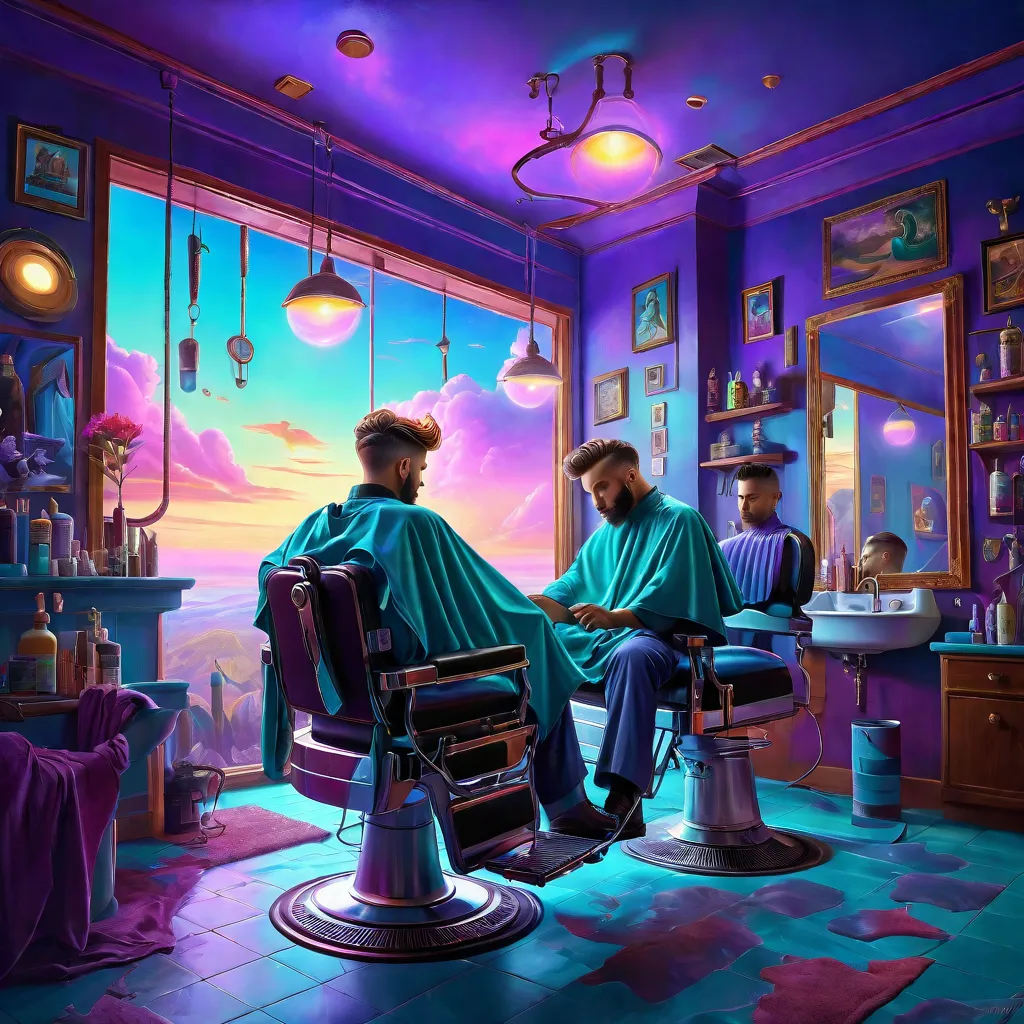
Getting a Haircut
These dreams often show the dreamer sitting in a barber’s chair while scissors or clippers glide across the scalp, the sound of snipping echoing and the scent of hair products filling the air. The sensation is vivid, a mix of tingling scalp and a sudden lightness as strands fall away.
Psychological Interpretation
You may be processing a recent change or a desire to shed an old identity, especially after a period of stress or transition. The haircut can signal a need to simplify your life, regain confidence, or assert control over how others perceive you.
Had this dream?
Are scissors cutting your hair, clippers shaving it short, or are you shocked by the mirror afterward? Tell us what happened and get a personalized interpretation of your own dream.
Interpret My DreamJungian / Archetypal
In Jungian terms, a haircut appears as a vivid symbol drawn from the collective unconscious, where hair functions as an archetypal emblem of the personal aura and the outward expression of the self. The act of cutting hair is an enactment of the transformative process of individuation, a moment when the ego consciously trims away excess or outdated aspects of identity in order to reveal a more authentic core. The dream’s imagery often mirrors the ancient motif of the “rebirth” or “renewal” archetype, suggesting that the dreamer is at a juncture where old patterns are being severed to make space for new development. The emotional tone that accompanies the haircut—whether relief, anxiety, embarrassment, or pleasure—reveals the underlying dynamics of the shadow and the ego’s relationship to change. A feeling of loss or vulnerability may indicate that the dreamer is resisting the surrender of familiar self-concepts, while a sense of liberation can signal an emerging acceptance of the shadow’s previously repressed material. The dream thus signals a psychological tension between the desire for stability and the unconscious drive toward growth, often triggered by life events such as career shifts, relationship transitions, or a sudden awareness of personal expectations that no longer serve the individual. A practical insight that emerges from this interpretation is to treat the haircut as a symbolic invitation to consciously evaluate which aspects of one’s self-presentation feel outdated or burdensome. By noting the specific emotions felt in the dream and comparing them to current life circumstances, the individual can identify concrete areas—perhaps a habit, role, or belief—that need to be “trimmed” in order to align more closely with an emerging, more integrated self. This reflective practice can facilitate a smoother passage through the individuation process, turning the symbolic act of cutting hair into a purposeful step toward personal wholeness.
Gestalt / Parts of Self
In Gestalt dream analysis the act of getting a haircut is read as a symbolic encounter with a fragment of the self that has been split off and placed in the background of conscious awareness. The scissors, the barber’s hands, and the falling strands of hair each stand for a specific quality—control, self-image, or a habit—that the dreamer has stopped acknowledging as part of their own identity. When the dream presents the haircut as a vivid, often unsettling event, the mind is projecting this disowned quality onto an external figure, allowing the dreamer to experience it without having to own it directly. The moment the hair is cut, the dreamer is confronted with the loss of a familiar outer layer, which in Gestalt terms signals an invitation to retrieve the projected piece and reintegrate it into the whole self. The emotional pattern that underlies this dream typically involves a tension between the desire for renewal and the fear of losing a part of oneself that feels essential. The dreamer may feel a mixture of relief at the lightness of the cut and anxiety about the altered appearance, reflecting an inner conflict between the need to let go of outdated patterns and the discomfort of confronting the unknown. This pattern often emerges when the individual is navigating a life transition—such as a career change, a relationship shift, or a personal redefinition—where old roles or self-concepts no longer serve. The haircut becomes a metaphorical stage where the disowned aspect, perhaps a suppressed ambition or a neglected emotional need, is temporarily externalized so the psyche can test its impact without fully committing to integration. A practical insight for someone who repeatedly dreams of getting a haircut is to notice the specific sensations and emotions that arise during the cut and to ask what quality those sensations might be pointing to in waking life. By naming the feeling—whether it is a sense of loss, a craving for control, or a yearning for a fresh start—the dreamer can begin to reclaim the projected fragment and bring it consciously into their self-concept, reducing the need for the dream to dramatize the process through an external barber. This conscious acknowledgment can ease the emotional turbulence and foster a smoother integration of the previously disowned part.
Psychodynamic / Freudian
In the psychodynamic view the manifest content of a dream about getting a haircut is the literal scene of a barber’s chair, the snipping of scissors, and the feeling of hair falling away. The latent content, however, treats the hair as a symbol of the dreamer’s ego-identity, vitality, and, in many traditions, sexual potency. When the hair is cut, the unconscious is signaling a desire to shed an outdated self-image or to surrender a part of the personal power that has become burdensome. The act of allowing another person—often a figure resembling a parental or authority figure—to shape the hair can also reflect an inner conflict between autonomy and the need for external approval, suggesting that the dreamer is negotiating the balance between self-direction and the influence of significant others. From a psychodynamic perspective the dream functions as a form of wish fulfillment that is cloaked in repression. The dreamer may unconsciously wish to be rid of responsibilities, expectations, or a self-concept that feels constricting, but the conscious mind represses this wish because it threatens the stability of the existing identity. The haircut becomes a safe outlet for that wish, allowing the unconscious to enact a transformation without confronting the anxiety that the change would provoke. Defense mechanisms such as displacement (projecting frustration onto the act of cutting), regression (returning to a child-like state of being cared for in a chair), or reaction formation (feigning enthusiasm for the haircut while feeling loss) often accompany the dream, producing an emotional pattern of ambivalence—simultaneous relief and loss, excitement and dread. A practical insight for someone who repeatedly dreams of getting a haircut is to examine what aspects of the self feel “overgrown” or out of sync with current life demands. By identifying the specific feelings of anxiety or guilt that surface when the hair is cut—whether they relate to aging, professional roles, or relational expectations—the dreamer can bring the repressed wish into conscious awareness. Journaling about the sensations experienced in the dream and exploring real-world situations where a change feels both desirable and threatening can help integrate the latent content, allowing the individual to make deliberate, rather than unconscious, adjustments to self-presentation and personal boundaries.
Personal Meaning
When a person wakes after dreaming of a haircut, the image often points to a sense of control over one’s outward presentation and the desire to reshape how one is perceived in daily life. From a personal-meaning perspective the dream asks the sleeper to consider whether a is actively trimming away aspects of themselves that no longer serve a purpose—behaviors, roles, or relationships that have become tangled or outdated. The act of cutting hair can symbolize a deliberate, sometimes abrupt, attempt to simplify or re-brand one’s identity, and the emotional tone of the dream—whether it feels relieving, anxious, or mournful—reveals how comfortable the dreamer is with that process. If the dreamer feels a surge of relief as the scissors glide, it may indicate an unconscious readiness to let go of a habit or expectation; if the feeling is dread or loss, it may signal fear of losing a part of the self that feels essential. The psychological significance lies in the interplay between self-image and social feedback. Hair is a visible marker that others notice, so the dream can surface underlying concerns about how the dreamer’s external “mask” aligns with internal values. Patterns of perfectionism, fear of judgment, or a recent need to conform to a new role—such as a promotion, a breakup, or a cultural shift—often trigger this motif. The dreamer might notice that the haircut occurs in a setting that mirrors a real-world context: a salon, a school, or a family bathroom, each adding layers of meaning about authority, intimacy, or routine. By reflecting on recent moments when they felt compelled to “appear” differently, the dreamer can trace the emotional currents that the dream is processing. A practical insight for the reader is to treat the haircut as a prompt for a small, concrete experiment in the waking world. The dreamer could choose one outward habit—perhaps a style of dress, a social media profile, or a repeated phrase they use—and intentionally modify it for a week, then observe how others respond and how the change feels internally. Questions to guide this reflection include: What part of my current “look” feels out of sync with who I am now? Which relationships or responsibilities feel like they are “weighing down” my sense of self? How would I describe the feeling of the scissors in my hand—steady, hesitant, or forced? By answering these, the dreamer turns the symbolic haircut into a tangible step toward aligning external presentation with internal intention.
Contemporary Psychological
A dream in which the dreamer is getting a haircut often emerges when the brain is trying to reconcile a recent shift in self-presentation with lingering concerns about how one is perceived by others. Neuroimaging studies of sleep show that the default-mode network reactivates autobiographical memories while the hippocampus rehearses recent episodic details; if a salon visit, a conversation about appearance, or a media image of a new hairstyle entered consciousness during the day, those fragments are likely to be replayed during slow-wave sleep. The amygdala’s heightened sensitivity to social evaluation can color the replay with affective tones—anxiety, relief, embarrassment—depending on whether the haircut felt voluntary or imposed. In this way, the dream functions as a neural “error-checking” routine, allowing the brain to test the emotional consequences of a changed outward identity without the risk of real-world judgment. The psychological significance of the haircut motif lies in its capacity to simulate a social threat while simultaneously offering a rehearsal of coping strategies. When the dreamer feels the scissors approaching, the threat-simulation circuitry—centered in the amygdala and ventromedial prefrontal cortex—generates a brief surge of stress that mirrors the fear of losing control over one’s image. As the dream progresses, the prefrontal regions may down-regulate this response, reflecting an internal negotiation between the desire for renewal and the fear of rejection. This dynamic explains why many people experience the dream during periods of transition, such as a new job, a breakup, or a shift in personal style. A practical takeaway is to use the emotional tone of the dream as a barometer of current self-evaluation: if the haircut feels invasive, the sleeper may be grappling with external pressures to conform; if it feels liberating, the mind may be signaling readiness for a fresh self-definition. By noting these feelings upon waking and reflecting on recent social contexts, the individual can align waking actions with the underlying emotional processing that the dream has highlighted.
Stress & Emotional Patterns
Dreams about getting a haircut often surface when the mind is trying to sort out a feeling of losing control over one’s appearance or identity. The act of cutting hair is a visible, irreversible change, so the dream can mirror a subconscious alarm that something in waking life is being altered without the dreamer’s full consent—perhaps a demanding project, a relationship dynamic, or a personal habit that is being reshaped by external pressures. The emotional tone of the dream—whether it feels relieving, painful, or humiliating—can indicate how the dreamer is processing that loss of agency. A sense of panic or embarrassment while the hair falls away may point to anxiety about how others will judge the new version of oneself, while a calm acceptance may suggest a willingness to let go of outdated self-concepts. In either case, the dream is flagging a load of emotional energy tied up in the need to appear competent, attractive, or socially acceptable, and it often surfaces when that load is approaching its limit. If the haircut dream feels unsettling, a practical first step is to pause and name the specific areas of life where change feels imposed or rushed. Write down the “hair” you feel is being cut—dead deadlines, a shifting role at work, a family expectation—and then ask yourself what part of that change feels threatening versus what might be an opportunity for renewal. Grounded self-care actions, such as a brief body-scan meditation or a short walk, can help lower the physiological arousal that fuels the dream’s anxiety. Next, experiment with small, intentional choices that restore a sense of agency: schedule a real haircut at a time you control, or simply rearrange a personal space to reflect a new aesthetic you like. By consciously reclaiming the act of shaping one’s outward image, the mind receives evidence that change can be self-directed rather than forced, which often reduces the intensity of the dream and eases the underlying stress. If the feeling persists, consider talking with a therapist who can help untangle the deeper narratives about self-worth and control that the haircut symbol is carrying.
Related Symbols
Had this dream?
Get a personalized AI interpretation that connects your dream to your specific life circumstances.
Interpret My Dream