Dying of Thirst / The Desert
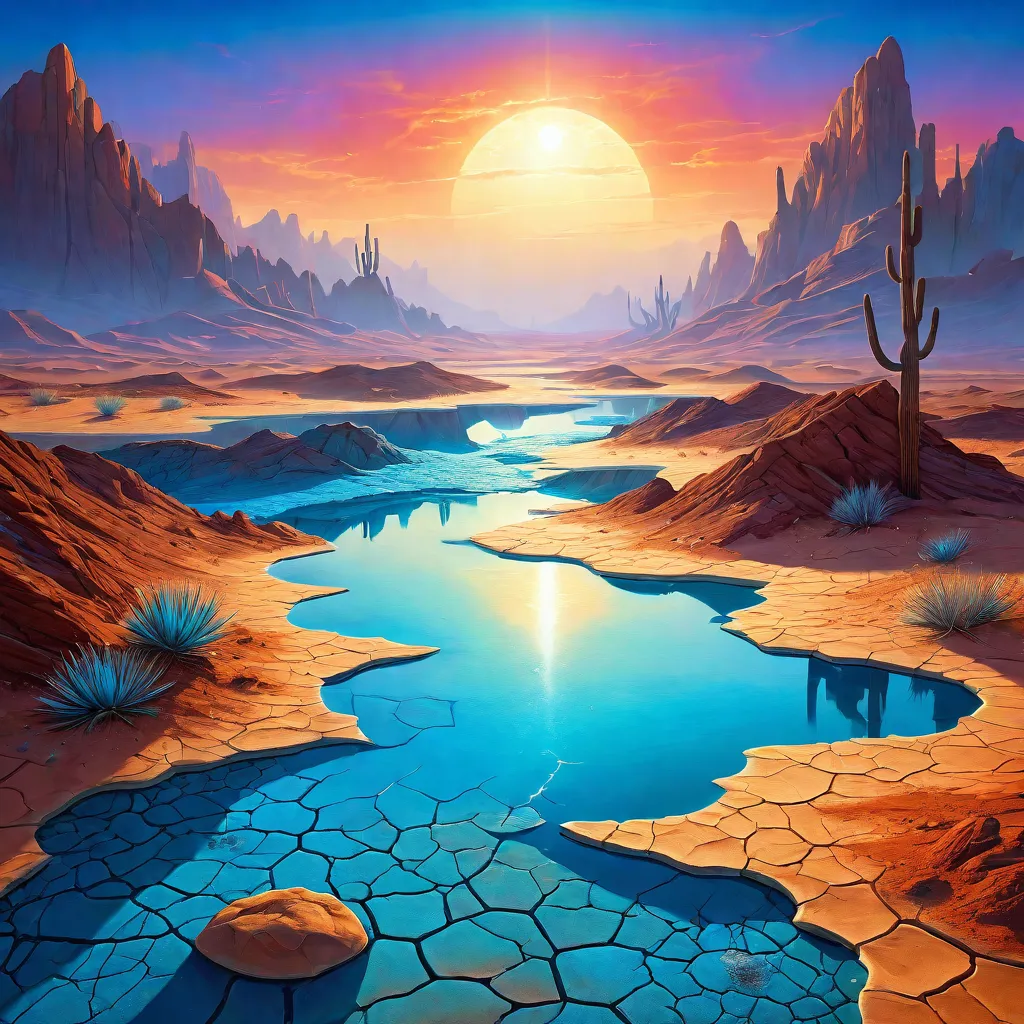
These dreams place the dreamer in a sun-scorched desert, the sky a relentless blue, and the ground cracked like dry earth. Thirst gnaws at the throat, the air feels thin, and a desperate search for water creates a palpable, panicked urgency.
Psychological Interpretation
You may be feeling a deep sense of depletion, as if your emotional reserves are running dry. The dream often surfaces when you are overwhelmed by unmet needs—whether a lack of support, a creative block, or a prolonged period of stress that leaves you feeling parched. It nudges you to locate sources of renewal before the thirst becomes overwhelming.
Had this dream?
You cross cracked desert ground searching for water, or find a dry well with your throat burning? Tell us what happened and get a personalized interpretation of your own dream.
Interpret My DreamGestalt / Parts of Self
In Gestalt terms the desert landscape and the sensation of dying of thirst are not external symbols but fragments of the dreamer’s own organism that have been split off and projected onto the scene. The arid expanse stands for a part of the self that feels depleted, isolated, or cut off from the flow of life-energy, while the acute thirst represents that same fragment’s desperate need for nourishment, connection, or affirmation that has been denied. When the dreamer watches themselves with, the desert becomes a stage on which the disowned part enacts its own neglect, allowing the conscious mind to recognize the loss without having to confront the underlying feeling directly. The psychological significance lies in the way the mind externalizes an inner emptiness, turning it into a vivid, sensory experience that can be felt even when the waking self is unaware of the specific need that is being ignored. The emotional pattern that typically precedes this dream is a chronic sense of being unsupported, whether by relationships, work, or personal values, leading to a feeling of “dryness” that accumulates until it surfaces as a desperate thirst in the dream. People experience the desert motif when they have been suppressing an aspect of themselves that requires emotional or creative sustenance—perhaps a talent, a desire, or a relational need—that has been denied or dismissed. By recognizing the desert as a projection of a disowned part, the dreamer can begin to reclaim ownership of that need, allowing it to be expressed in waking life rather than being left to with in a symbolic wasteland. A practical insight is to notice moments in the day when a subtle “dryness” appears—such as a lingering irritability, a sense of stagnation, or a craving for connection—and to deliberately attend to that feeling by offering the self a small, concrete act of nourishment, whether a brief conversation, a creative pause, or a physical act of caring, thereby integrating the split fragment before it re-emerges as a dramatic desert dream.
Psychodynamic / Freudian
The manifest image of a barren desert and the sensation of dying of thirst often signals a latent feeling of emotional depletion that the dreamer has not allowed into conscious awareness. In psychodynamic terms, the desert functions as a symbolic container for the dreamer’s unconscious perception of a void—an absence of nurturing, affection, or purpose—that has been pushed out of waking thought through repression. The desperate search for water becomes a disguised wish fulfillment: the unconscious mind is enacting a scenario in which the need for replenishment is dramatized, allowing the dreamer to experience, intensity of the longing without confronting the underlying relational loss or unmet dependency directly. Defense mechanisms such as displacement and intellectualization may be at work, with the dreamer substituting the abstract fear of being abandoned or unsupported with the concrete image of a physical thirst that can be visualized and, in the dream, temporarily escaped. The psychological significance of this dream lies in the pattern of chronic anxiety and a sense of being stranded that often accompanies periods of high stress, unresolved grief, or a perceived lack of personal growth. The desert’s endless horizon mirrors an internal landscape where the dreamer feels stuck, unable to access the “inner resources” that would sustain emotional well-being. This pattern emerges because the mind has learned to protect the conscious self from the pain of acknowledging deep-seated feelings of emptiness, yet the unconscious continues to signal the deficit through vivid, bodily metaphors. A practical insight for the dreamer is to treat the dream’s thirst as a cue to explore what “water” is missing in waking life—whether it be supportive relationships, creative expression, or a sense of purpose—and to deliberately cultivate those sources, thereby reducing the need for the unconscious to dramatize the shortage in sleep.
Personal Meaning
The image of a barren desert and the sensation of dying of thirst often points to a deep feeling of emotional or psychological depletion in the dreamer’s waking life. From a self-determinacy perspective, the dream is a signal that basic psychological needs—autonomy, competence, and relatedness—are being neglected, leaving the mind to construct a landscape where the most fundamental physical need, water, becomes a metaphor for inner nourishment. The dreamer may be experiencing a prolonged period of overwork, relational strain, or a loss of purpose that leaves them feeling “parched” for meaning, connection, or personal agency. Emotional patterns that accompany this dream typically include irritability, a sense of being stuck, and a vague anxiety that something essential is slipping away, even if the conscious mind cannot readily name the source. To translate the dream into concrete self-reflection, the reader can ask: what areas of life feel empty or unfulfilled right now, and what specific actions have been taken—or avoided—that might be draining the inner reservoir? Which relationships feel distant, and what small steps could restore a sense of belonging? Are there personal goals that have been postponed, and how might re-engaging with them replenish a sense of competence? By identifying the “dry spots” in daily routines and acknowledging the need for restorative practices—such as regular breaks, meaningful conversations, or creative expression—the dreamer can begin to replace the desert’s aridity with a more balanced internal climate. A practical insight is to schedule a brief, daily “hydration” ritual: a moment of mindfulness, a walk in nature, or a brief conversation that reminds the mind of its capacity for renewal, thereby counteracting the subconscious warning that the dream delivers.
Contemporary Psychological
The image of a barren desert and the sensation of dying of thirst often emerges when the brain is processing a mismatch between internal physiological states and perceived environmental demands. From a neurocognitive perspective, the dream activates the insular cortex, which integrates interoceptive signals of dehydration, and the amygdala, which tags the scenario as a salient threat. During sleep, especially in rapid-eye-movement phases, the hippocampal-cortical network replays recent experiences and emotional residues, and the desert motif can serve as a symbolic compression of a broader sense of scarcity—whether of resources, social support, or emotional bandwidth. The emotional pattern that underlies the dream is typically a low-grade anxiety that has been amplified by the brain’s threat-simulation system, which rehearses worst-case scenarios to prepare the organism for future challenges. When waking life involves chronic stress, unmet needs, or a feeling of being “parched” for meaning, the brain may translate those abstract deficits into the concrete, evolutionarily ancient fear of dehydration, a condition that historically signaled imminent danger. The practical implication of this recurring theme is that the sleeper can use the dream as a diagnostic cue to locate an area of unmet need and address it directly. By pausing to identify what in waking life feels depleted—such as time for rest, a supportive relationship, or a clear purpose—the individual can intervene with concrete actions, like scheduling regular breaks, reaching out for social connection, or clarifying personal goals. This targeted response not only reduces the emotional load that fuels the threat-simulation loop but also reinforces the brain’s capacity to integrate emotional processing with adaptive behavior, diminishing the likelihood that the desert will reappear as a nightly warning.
Jungian / Archetypal
In Jungian terms the desert is an archetypal space of stark emptiness that mirrors the unconscious’s “dry” terrain when the psyche is deprived of symbolic nourishment. The image of dying of thirst is not merely a physical fear but a dramatization of an inner depletion of psychic fluid—an absence of the archetypal “life-giving” currents that flow from the collective unconscious through the personal unconscious to the conscious ego. When the dreamer confronts a barren landscape and feels the urge to die from lack of water, the dream is pointing to a rupture in the process of individuation: the ego has been cut off from the deeper wellspring of meaning, intuition, and the animus/anima currents that sustain the self-realization journey. The emotional pattern that underlies this dream often involves a persistent sense of alienation, chronic over-work, or a lifestyle that suppresses inner feeling in favor of external achievement. The shadow side may appear as a denial of vulnerability, a refusal to acknowledge the need for emotional replenishment, or an unconscious identification with the “hard-boiled” survivor who can endure any hardship without asking for help. People experience the desert dream when their inner life has been ignored, when they have not integrated the nurturing aspects of the feminine archetype, or when they have been forced to survive on the surface of consciousness without accessing the deeper well of the collective unconscious. The dream therefore signals a call to re-engage with the symbolic water of imagination, myth, and relational depth. A practical insight that emerges from this interpretation is that the dreamer should deliberately cultivate moments of symbolic “drinking” by engaging with creative or ritual practices that reconnect them to the archetypal currents of the unconscious. Simple acts such as journaling about recurring images, spending time in nature where water is present, or practicing guided meditation that visualizes a source of clear water can restore the flow of psychic nourishment. By honoring the need for inner hydration, the individual creates a bridge between the conscious ego and the deeper layers of the self, thereby advancing the individuation process and reducing the recurring terror of dying of thirst.
Stress & Emotional Patterns
Dreams in which you wander a barren landscape and feel an unquenchable thirst often surface when the mind is trying to translate a chronic sense of depletion into visual language. The desert’s endless horizon mirrors a feeling that your emotional reserves are being stretched thin, while the desperate search for water reflects an unmet need for nourishment—whether that need is physical rest, social connection, or a break from relentless responsibilities. In everyday life this pattern can appear as a low-grade anxiety that hovers in the background, a subtle irritability that spikes when you’re asked to take on another task, or a lingering sense that you’re “running on empty.” The dream’s intensity can amplify when you’re juggling multiple deadlines, dealing with relationship strain, or neglecting basic self-care such as sleep, nutrition, or regular hydration, because the brain uses the stark imagery of thirst to flag that something essential is missing. If you keep waking to this scene, start by checking the most literal aspects of your life: are you drinking enough water, getting adequate rest, and scheduling regular pauses? Often the most effective first step is to create a small, concrete ritual that restores a sense of replenishment—perhaps a five-minute mindfulness break where you focus on the sensation of breathing, or a brief walk outside to break the feeling of being trapped in a mental desert. Journaling about what the water represents for you—comfort, support, creativity—can help you identify where those resources are scarce and what you might ask for from friends, colleagues, or a therapist. Finally, consider setting clear boundaries around the sources of overwhelm: delegate tasks, say no to non-essential commitments, and prioritize activities that genuinely hydrate your spirit, such as a hobby you love or a conversation with a trusted confidante. By turning the dream’s warning sign into a plan for real-world replenishment, you can gradually dissolve the sense of dying thirst and restore a feeling of being grounded and sustained.
Related Symbols
Had this dream?
Get a personalized AI interpretation that connects your dream to your specific life circumstances.
Interpret My Dream