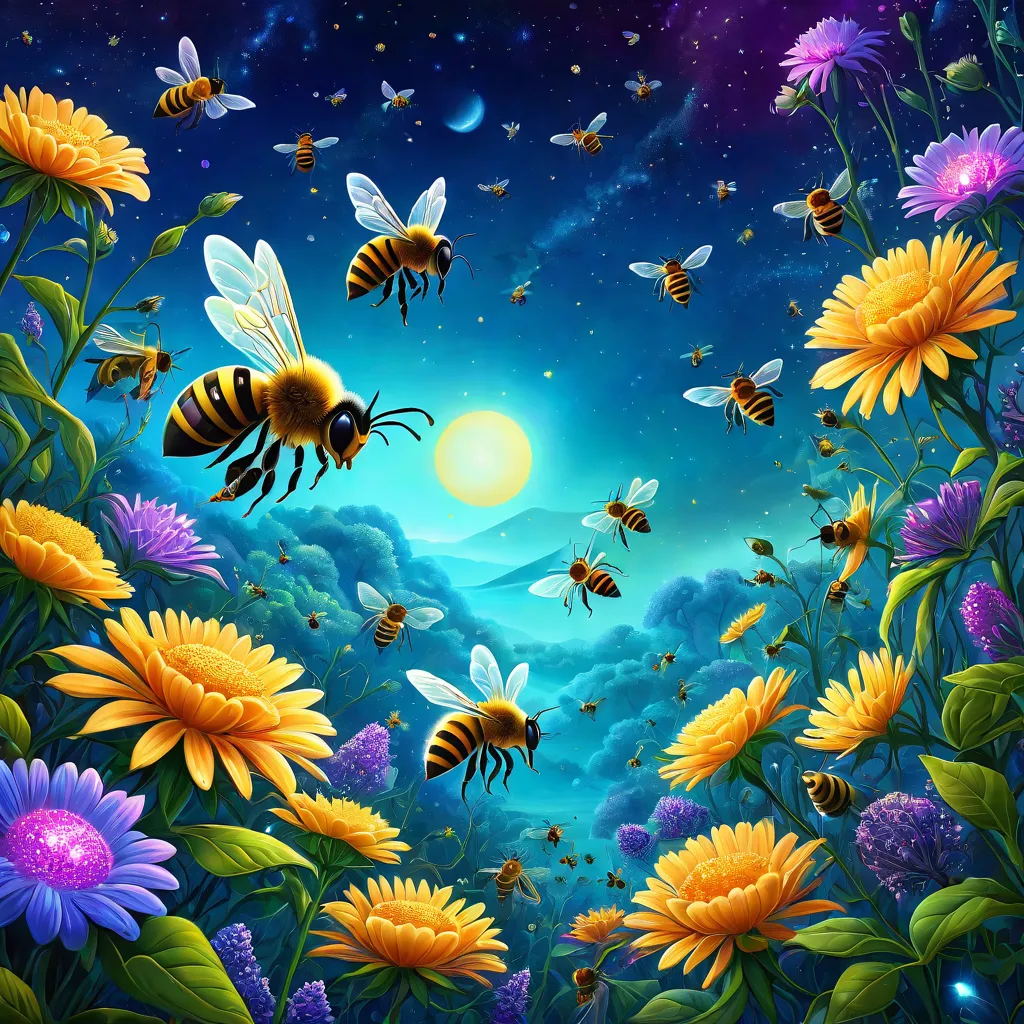
Bees & Being Stung
These dreams often feature a swarm of buzzing bees that fill the air, sometimes hovering around the dreamer or landing on skin, and a sudden sting that sends a sharp, burning pain through the body. The scene feels vivid, with the hum of wings, the sting of the sting, and a lingering sense of alarm or urgency.
Psychological Interpretation
You may be confronting a situation where hidden pressures or expectations are building up, and the sting signals a warning that something you value is being threatened. It often appears when you feel overwhelmed by responsibilities, interpersonal conflicts, or a fear of being hurt by others' demands. Recognizing the sting can help you set clearer boundaries and address the source of the tension.
Had this dream?
A buzzing swarm fills the air—or bees land on your skin and one sharp sting makes you recoil? Tell us what happened and get a personalized interpretation of your own dream.
Interpret My DreamJungian / Archetypal
In Jungian terms the bee often appears as a living symbol of the collective unconscious, embodying the archetype of the hive—a structured community where each member contributes to a larger, purposeful whole. The bee’s industrious flight, its rhythmic buzzing, and its role as a pollinator point to the dreamer’s connection with the animating forces of productivity, cooperation, and the transformative power of shared labor. When the dreamer is stung, the sting becomes a manifestation of the shadow, the part of the psyche that is hidden, feared, or denied. The pain of the sting signals an intrusion of the unconscious into conscious awareness, urging the individual to recognize a aspects of the self that have been suppressed in the pursuit of conformity or external expectations. The emotional pattern behind this dream usually involves a tension between the desire to belong to a collective and the fear of being harmed by that very belonging. The sting can arise when the dreamer feels over-identified with group norms, when personal boundaries are breached, or when the cost of participation outweighs the reward. It is often triggered by situations where the dreamer is compelled to work within a rigid system—such as a demanding workplace, a family hierarchy, or a social movement—while sensing that a part of their authentic self is being wounded or ignored. The sting therefore acts as a psychic alarm, indicating that the individuation process has reached a point where the ego must renegotiate its relationship with the collective, integrating the shadow’s warning rather than dismissing it. A practical insight that emerges from this interpretation is that the dreamer should treat the sting not merely as a painful event but as a signal to re-establish personal boundaries within the communal sphere. By consciously acknowledging the discomfort and exploring what the sting represents—perhaps a suppressed need for autonomy, a hidden talent, or an unexpressed feeling—the individual can transform the wound into a catalyst for growth. Practicing moments of reflective pause, such as journaling about the specific circumstances that evoke the bee imagery, can help the dreamer differentiate between healthy cooperation and self-sacrificing conformity, thereby advancing the path toward wholeness.
Gestalt / Parts of Self
In Gestalt terms the swarm of bees in a dream is interpreted as a collection of fragmented, disowned aspects of the dreamer’s personality that have been pushed out of conscious awareness. Each bee carries a distinct quality—busy productivity, social cooperation, or the sting of criticism—that the dreamer has not fully accepted as part of the self. When the dreamer is stung, the pain is not merely a physical sensation but a symbolic feedback from the psyche indicating that a rejected part is demanding acknowledgment. The sting acts as a sudden, vivid reminder that the disowned element is trying to re-enter the field of awareness, urging the dreamer to claim ownership of the feelings, impulses, or responsibilities that the bees represent rather than continuing to project them onto an external swarm. The emotional pattern that typically underlies this dream is a tension between the desire to be productive and socially engaged and a fear of being hurt or overwhelmed by those very qualities. The dreamer may be avoiding tasks, relationships, or personal standards because they anticipate criticism or burnout, yet the unconscious mind brings those pressures to the surface in the form of aggressive bees. The experience of being stung signals that the avoidance is no longer sustainable; the psyche is prompting the dreamer to integrate the disowned parts by recognizing their value and setting appropriate boundaries. A practical insight is to pause when the sting is felt in waking life and ask, “What part of me am I rejecting that is trying to be heard?” By naming that quality—whether it is a drive for achievement, a need for connection, or a critical inner voice—the dreamer can begin to own it, reducing the need for the dream to repeat the painful projection.
Psychodynamic / Freudian
The dream’s manifest image of buzzing bees and the sudden pain of a sting is often a condensation of the dreamer’s repressed anxieties about being overwhelmed by seemingly minor but persistent demands. In psychodynamic terms, the bees function as a collective symbol for the dreamer’s internalized expectations—whether from family, work, or social circles—that swarm the conscious mind, while the sting represents a sudden, sharp confrontation with an emotion or impulse that the ego has been defending against. The latent content, therefore, may be a wish for the dreamer to assert control over these pressures, a wish that is cloaked in the defensive posture of avoidance; the sting’s pain signals the ego’s recognition that the repression can no longer contain the underlying conflict, prompting a defensive reaction such as displacement onto the external “bees” rather than the internal source of tension. Emotionally, the dream typically follows a pattern of heightened irritability, a sense of vulnerability, and a lingering feeling of being “under attack” by forces that appear innocuous at first glance. The experience arises when the dreamer’s unconscious has encoded a series of small grievances—perhaps unexpressed resentment toward a colleague’s habit, a partner’s criticism, or an internal critic’s nagging voice—into a symbolic swarm that the conscious mind can tolerate only until the sting forces acknowledgment. The psychodynamic insight offered by this imagery is that the sting is not merely a punitive sensation but a signal that the ego’s repression has reached its limit, inviting the dreamer to examine the specific triggers that have been displaced onto the bees. By recognizing the sting as a cue to explore the underlying feeling of being overwhelmed, the individual can begin to negotiate the boundary between acceptable pressure and intrusive demand, thereby reducing the need for the mind to dramatize the conflict in sleep.
Personal Meaning
Dreams about bees and being stung often surface when the dreamer is navigating a situation that feels simultaneously productive and threatening. In a personal-meaning framework the bee colony can symbolize a network of responsibilities, social expectations, or collaborative projects that the individual is part of, while the sting represents an acute sense of being hurt, rejected, or exposed within that same context. To make the connection explicit, the reader might ask: Which areas of life feel buzzing with activity—such as a demanding job, a family gathering, or a creative group—and where have I recently sensed a sharp, painful reaction, perhaps a criticism, a conflict, or a self-imposed standard that feels punitive? Noting the timing of the sting in the dream—whether it occurs after a period of calm, during a frantic chase, or as a surprise—can reveal whether the emotional wound is anticipated, unexpected, or a response to a perceived breach of personal boundaries. From a psychological standpoint the dream reflects an underlying tension between the desire for collective contribution and the fear of individual vulnerability. The bee’s industriousness taps into the dreamer’s internalized belief that value comes from hard work and cooperation, while the sting activates the brain’s threat-detection circuitry, signaling that the cost of that contribution may be personal injury or loss of self-esteem. This pattern often emerges when the individual has internalized external standards—such as perfectionism, people-pleasing, or the need to be indispensable—that create a chronic background of stress. The sting, then, is not merely a literal pain but a symbolic alarm that the current level of sacrifice may be exceeding the dreamer’s capacity for self-care, leading to feelings of resentment, anxiety, or shame. A practical insight is to treat the sting as a cue for boundary-setting rather than as an inevitable consequence of participation. The reader can experiment with small, concrete adjustments: for example, scheduling a brief pause before responding to a demanding request, clearly communicating limits to a team, or allocating a regular “quiet hour” for personal reflection. By observing how these micro-changes affect the emotional tone of waking life, the dreamer can gradually recalibrate the balance between productive engagement and personal safety, turning the bee’s buzz from a source of dread into a rhythm of sustainable collaboration.
Contemporary Psychological
Dreams in which bees appear and the dreamer is stung are often interpreted as a neural rehearsal of a sudden, sharp threat that the brain has flagged as salient during waking life. Contemporary affective neuroscience suggests that the amygdala and hippocampal circuits tag emotionally charged events for consolidation during sleep, and the rapid, stinging sensation of a bee mimics the brain’s own “alarm signal” that a previously encountered stressor—such as a conflict at work, a criticism, or a health worry—has not been fully processed. The buzzing of the hive provides a rhythmic auditory cue that can trigger the brain’s default-mode network to simulate the social dynamics surrounding the stressor, while the sting itself activates the somatosensory representation of pain, reinforcing the memory trace through norepinephrine-mediated arousal. From a psychological standpoint, the dream reflects a pattern of hypervigilance and anticipatory anxiety. Individuals who experience this motif frequently report feeling “on edge” in situations where they anticipate judgment or failure, and the bee’s collective presence symbolizes a perceived swarm of expectations or obligations that feel overwhelming. The sting, being localized yet intense, mirrors the way a specific criticism or setback can pierce an otherwise stable self-concept, prompting a cascade of negative affect that the brain attempts to rehearse in a safe, virtual environment. This rehearsal serves a functional purpose: by replaying the threat in a dream, the brain can test coping strategies, adjust predictive models of danger, and integrate the experience into a broader narrative of self-efficacy. A practical insight that emerges from this interpretation is that the dream offers a diagnostic signal about the dream’s current threat-monitoring system. When the bee motif recurs, the sleeper can benefit from a brief waking exercise that isolates the specific “sting”—the precise worry or criticism that feels most painful—and then deliberately re-frames it in a more controllable context, such as writing a short reflective note that outlines possible responses. This targeted cognitive rehearsal can reduce the intensity of the nocturnal simulation, allowing the brain to consolidate the memory without the persistent alarm that fuels the dream.
Stress & Emotional Patterns
Dreams about bees and the sharp pain of being stung often arise when the mind is trying to make sense of a situation that feels both buzzing with activity and potentially harmful. The relentless hum of a hive can mirror the background chatter of worries, deadlines, or interpersonal demands that have become so constant they feel like a low-frequency noise you can’t ignore. When a bee lands on you or stings you, the sudden sting translates that background noise into an acute, physical reminder that something you thought was merely “busy” may actually be crossing a personal boundary or threatening your sense of safety. In many cases, the sting is not about literal danger but about the emotional sting of criticism, rejection, or an unexpected setback that has left you feeling exposed and vulnerable. The dream therefore signals that the dreamer’s stress load has moved from a diffuse sense of overwhelm to a pinpointed anxiety that may be linked to a specific relationship, workplace pressure, or an internal belief that they are not “good enough” to avoid being hurt. To work with this imagery, start by giving the mind a chance to pause the buzzing before it turns into a sting. Simple grounding practices—such as placing a hand on a solid surface, naming five things you can see, four you can hear, three you can touch, two you can smell, and one you can taste—can help the nervous system shift out of a hyper-vigilant state. Next, journal the moments in waking life when you felt a similar “sting” of criticism or sudden anxiety, and ask what boundary was crossed or what expectation felt impossible. If the pattern points to a specific source, such as a demanding boss or a strained family dynamic, consider setting a small, concrete boundary (e.g., a “no-email after 7 p.m.” rule or a brief, scheduled check-in with a loved one) and observe how the dream’s intensity changes over a few weeks. Regular self-compassion breaks—telling yourself that it’s okay to feel hurt and that you deserve protection—can soften the sting’s emotional charge. If the dream recurs despite these steps, or if the underlying stress feels unmanageable, reaching out to a therapist who specializes in anxiety and trauma can provide a safe space to unpack the deeper layers of the hive and develop longer-term coping strategies.
Related Symbols
Had this dream?
Get a personalized AI interpretation that connects your dream to your specific life circumstances.
Interpret My Dream