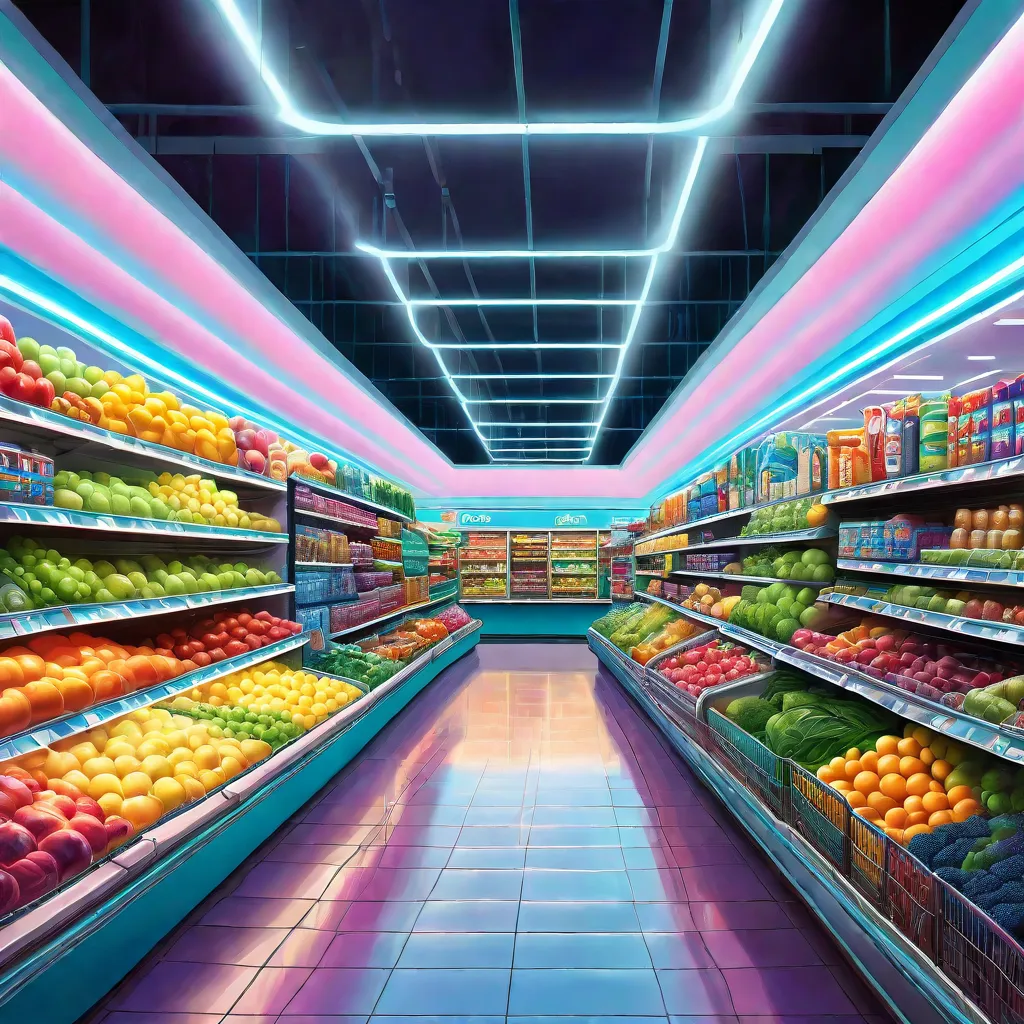
Supermarket / Mall
These dreams place the dreamer inside a bustling supermarket or mall, wandering aisles filled with bright lights, the clatter of carts, and the scent of fresh produce. The atmosphere feels both familiar and slightly overwhelming, as the dreamer moves from stall to stall, searching for something specific while a subtle undercurrent of urgency hums in the background.
Psychological Interpretation
You may be processing a need to organize choices and resources in your waking life, especially when faced with competing priorities at work or home. The setting often appears when you feel pressure to make a decision quickly, or when you are trying to reconcile a desire for abundance with a fear of missing out. Recognizing the specific aisles or items that draw your attention can point to the areas where you need clarity.
Had this dream?
Are you wandering bright aisles, pushing a cart through crowds, or lost among shops and escalators? Tell us what happened and get a personalized interpretation of your own dream.
Interpret My DreamJungian / Archetypal
In Jungian terms a dream set in a supermarket or a mall is often read as a symbolic marketplace of the psyche, where the collective unconscious presents a variety of archetypal images and choices that mirror the dreamer’s current stage of individuation. The aisles, shelves, and storefronts stand for the organized structures of the personal and collective unconscious, each product representing a potential aspect of the self—talents, desires, or social roles—that the dreamer may be evaluating or rejecting. The act of wandering through the space, selecting items, or feeling overwhelmed by the abundance reflects the tension between the conscious ego’s need for order and the shadow’s hidden impulses that demand acknowledgment. When the dreamer experiences anxiety, confusion, or a sense of being lost among the rows, it signals that the shadow material are not yet integrated, and that the ego is confronting a proliferation of possibilities that challenge its current identity. The emotional pattern that typically accompanies this dream is a mixture of curiosity and dread, a pull toward exploring new possibilities coupled with fear of making the wrong choice. This pattern arises because the market archetype is linked to the ancient motif of the “great banquet” in which the community gathers to receive nourishment from the collective source. In modern life, the supermarket becomes a personal arena where the dreamer tests the adequacy of his or her internal resources against external expectations, such as career success, social status, or material acquisition. The practical insight offered by this image is to treat the dream’s aisles as a diagnostic map: pause before reaching for the most conspicuous item and ask what hidden quality—perhaps a neglected talent or an unacknowledged feeling—lies behind the attraction. By consciously recognizing the shadow’s pull in these symbolic selections, the individual can make more intentional choices that advance the process of individuation rather than remaining trapped in a compulsive cycle of consumption.
Gestalt / Parts of Self
In Gestalt terms the supermarket or mall appears as a stage on which the dreamer projects fragments of the self that have been split off and left unclaimed. The aisles, the bright signage, the endless rows of products stand for the organized categories the mind has imposed on experience own needs, desires, and fears. When the dreamer walks through the space, each shelf becomes a container for a particular quality that has been denied or ignored—perhaps the need for nurturing represented by fresh produce, the desire for excitement by flashy electronics, or the fear of scarcity shown by empty shelves. The act of navigating the market is the psyche’s attempt to locate and re-integrate these disowned parts, treating them as external objects that can be examined, chosen, or discarded. The emotional tone that accompanies the dream often reveals how the dreamer is handling the tension between ownership and projection. A sense of overwhelm, anxiety, or frantic shopping suggests that the self is still fragmented, with many parts competing for attention and validation. Conversely, a feeling of calm, purposeful browsing or a quiet moment of standing in one aisle indicates that the dreamer is beginning to recognize the internal origin of those impulses and to allow the parts to coexist without being forced into a single, dominant role. The dream therefore signals a need to acknowledge the multiplicity of the self, to stop treating the market as a place of external acquisition and to see it as a symbolic map of internal resources that have been compartmentalized. A practical step that emerges from this interpretation is to treat the next real-world shopping experience as a reflective exercise. When entering a store, the dreamer can pause before selecting an item and ask what inner quality that product might represent—whether it is a longing for comfort, a wish for control, or an unexpressed creativity. By naming the internal source and allowing oneself to “own” it in the present moment, the dreamer begins the process of reintegrating the split fragment, reducing the need for projection and fostering a more cohesive sense of self.
Psychodynamic / Freudian
In a psychodynamic reading the supermarket or mall appears in the manifest content as a familiar, bustling environment where the dreamer walks among aisles of goods, selects items, and perhaps feels a mix of curiosity, anxiety, or urgency. The latent content, however, points to the unconscious organization of desire and the need to negotiate competing wishes for fulfillment and control. The aisles symbolize the pathways of the psyche through which the dreamer attempts to access various aspects of the self—needs, wishes, and socially sanctioned roles. Selecting a product can be read as a symbolic act of choosing among alternative gratifications, while the endless shelves reflect the abundance of repressed wishes that have not yet been integrated into conscious awareness. The dream therefore functions as a wish-fulfilling scenario: the unconscious offers a safe, socially acceptable stage on which the dreamer can imagine obtaining what is lacking, whether it is material security, emotional nourishment, or a sense of competence in making choices. From a defense-mechanism perspective the dream often masks underlying anxiety about scarcity or loss of control. The dreamer may employ rationalization, convincing themselves that the shopping experience is routine, thereby keeping deeper feelings of inadequacy or fear of deprivation out of conscious focus. Repression may have pushed the true source of the yearning—perhaps an unmet need for affection, autonomy, or validation—into the unconscious, and the supermarket provides a symbolic container where that need can be expressed indirectly. The emotional pattern that typically accompanies the dream includes a tension between excitement at the variety of options and a subtle dread of being overwhelmed, reflecting the inner conflict between the desire for fulfillment and the fear of being unable to satisfy all internal demands. A practical insight that emerges from this interpretation is that the dream invites the individual to examine how they make choices in waking life. By paying attention to the specific items that draw attention in the dream—whether they are food, clothing, or luxury goods—the person can trace the symbolic link to the underlying unmet wish. Recognizing that the supermarket scene is a metaphor for the psyche’s inventory of desires encourages a more conscious appraisal of what is truly needed versus what is merely a socially sanctioned illusion of satisfaction, allowing the individual to address the repressed longing directly rather than relying on the indirect, defensive fantasy of the dream.
Personal Meaning
The supermarket or mall in a dream often functions as a mental map of the dreamer’s current inventory of options, needs, and social roles. In this view the aisles, shelves, and checkout lines stand for the way the mind categorizes possibilities—whether they are career paths, relationships, health habits, or material desires. The psychological pull of the setting comes from its everyday familiarity and the built-in tension between abundance and scarcity: the dreamer may feel a subtle pressure to fill a cart that never seems full, reflecting an inner dialogue about what is truly necessary versus what is merely available. Emotionally, the scene can oscillate between excitement at the variety of choices and anxiety about the effort required to decide, a pattern that often mirrors waking moments of indecision or a feeling of being rushed by external expectations. When the dreamer reflects on the specific details of the mall experience, they can uncover personal meaning that is not generic but rooted in their own life. They might ask themselves whether they were wandering aimlessly through the aisles, searching for a particular product, or standing in a long line at the checkout, and what emotions accompanied each action—did a sense of curiosity dominate, or did a vague unease arise when the shelves were empty? They could consider whether the items they tried to purchase were practical necessities, indulgent treats, or symbolic objects like a gift for someone else, and how that mirrors current decisions about spending time, energy, or money. If the dreamer felt overwhelmed by the sheer number of choices, they might explore whether their waking schedule is packed with competing projects, social invitations, or health goals that feel equally compelling yet hard to prioritize. Conversely, if the mall felt orderly and satisfying, it may indicate a period of confidence in how they are allocating resources. A practical insight that emerges from this perspective is to treat the dream as a prompt for a brief “inventory audit” in waking life. By setting aside a few minutes to write down the most salient categories that appeared in the dream—such as food, clothing, entertainment, or social interaction—the dreamer can then rank each by how much it aligns with their deeper values versus how much it is driven by external pressure. This simple exercise helps translate the symbolic abundance of the supermarket into a concrete, actionable plan, reducing the feeling of being lost among endless aisles and fostering a clearer sense of direction.
Contemporary Psychological
A dream that takes place in a supermarket or a mall often emerges when the brain is rehearsing the dense network of choices and social cues that dominate modern life. The visual clutter of aisles, price tags, and crowds activates the hippocampus’s spatial mapping system while the ventral striatum registers the reward value of potential purchases. At the same time, the amygdala flags any perceived threat—such as the fear of missing a sale, being judged by other shoppers, or running out of essential items. This combination creates a vivid, emotionally charged simulation in which the sleeper’s mind evaluates both the practical logistics of acquiring resources and the underlying anxiety about adequacy, status, and control. Neuroscientific research on memory consolidation shows that during slow-wave sleep the brain replays recent experiences to integrate them into long-term schemas. When the waking day has been filled with errands, budgeting, or social comparison, the brain may replay the supermarket setting to test decision-making strategies and to rehearse coping mechanisms for social evaluation. The dream therefore functions as a low-stakes threat-simulation, allowing the sleeper to explore scenarios of scarcity or excess without real consequences. Recognizing that the dream reflects a heightened load of choice and evaluation can help the individual notice patterns of decision fatigue in waking life; a practical step is to simplify shopping routines—such as by creating a concise list or limiting time in aisles—to reduce the emotional load that the brain is trying to resolve during sleep.
Stress & Emotional Patterns
Dreams of a supermarket or mall often surface when the mind is trying to make sense of a flood of options, obligations, or social comparisons that feel too many to handle at once. The aisles, with their endless shelves and bright signage, become a metaphor for the mental inventory of tasks, responsibilities, and expectations that the dreamer is juggling—whether it is a packed work schedule, a growing to-do list at home, or the pressure to keep up with peers’ achievements. The feeling of wandering aimlessly, being unable to decide what to buy, or being chased by a checkout line can reflect a heightened state of anxiety, where the dreamer’s internal “budget” of emotional energy is stretched thin. In many cases, the dream signals that the person is experiencing a sense of overwhelm, perhaps because they have not yet prioritized or filtered what truly matters, leaving them stuck in a loop of “more, more, more” without a clear sense of purpose. To move from that feeling of being lost among the shelves to a calmer, more grounded state, it helps to translate the dream’s imagery into concrete, manageable actions. Start by creating a short, written inventory of the current commitments and then deliberately prune it—ask yourself which items are essential, which can be postponed, and which can be delegated or let go entirely, This act of “shopping list” clarification mirrors the dream’s setting and gives the mind a tangible way to reduce cognitive overload. Pair this with brief mindfulness pauses throughout the day: a few deep breaths while visualizing a calm, empty aisle, or a short walk that lets the mind step away from the “crowded” mental marketplace. Regularly checking in with how you feel after each pruning session—perhaps in a journal—reinforces the sense that you are in control of the selection process, not the other way around. Over time, these practices can diminish the anxiety that fuels the supermarket-mall dream and restore a feeling of agency and emotional balance.
Related Symbols
Had this dream?
Get a personalized AI interpretation that connects your dream to your specific life circumstances.
Interpret My Dream